


What's Happening?
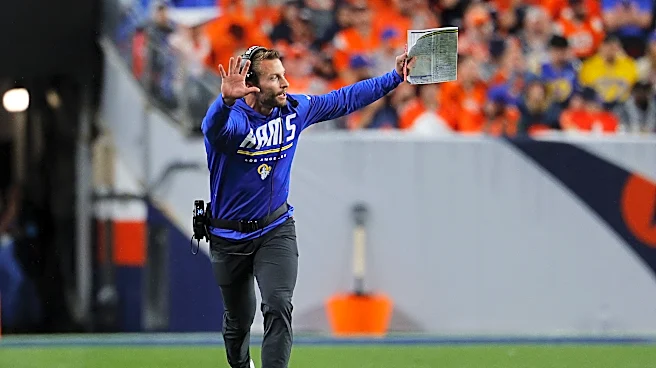
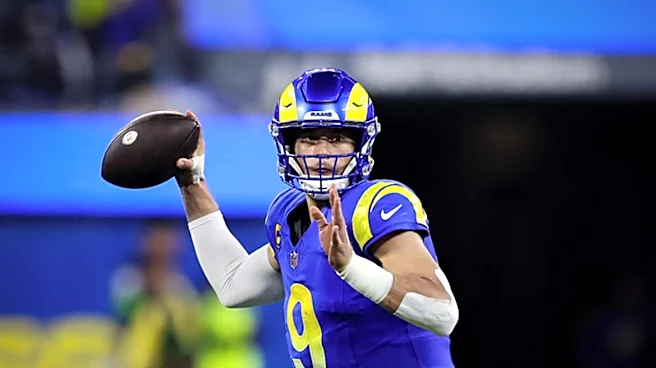
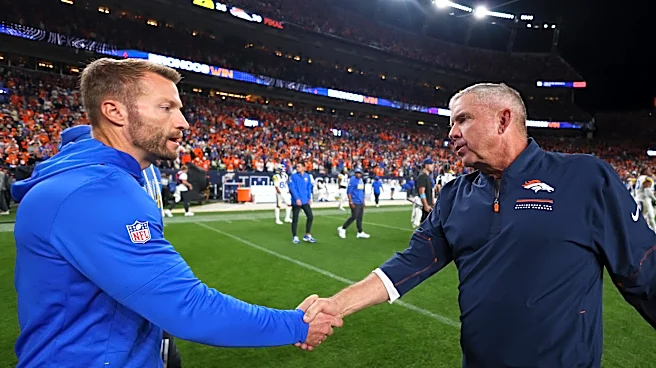
Los Angeles Rams coach Sean McVay announced that the NFL has informed him officials made an error in calling a late pass-interference penalty during the Rams' recent 30-26 loss to the Denver Broncos. The controversial call occurred with 47 seconds remaining
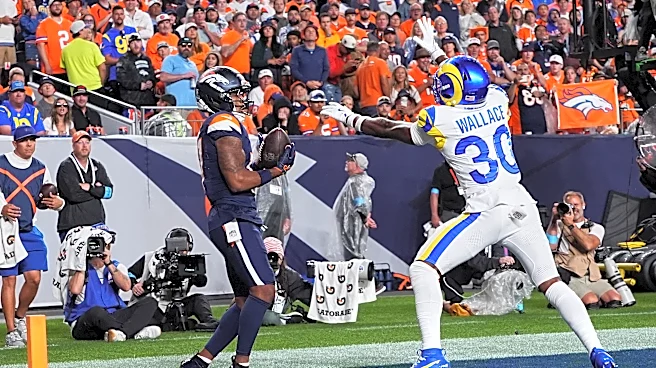
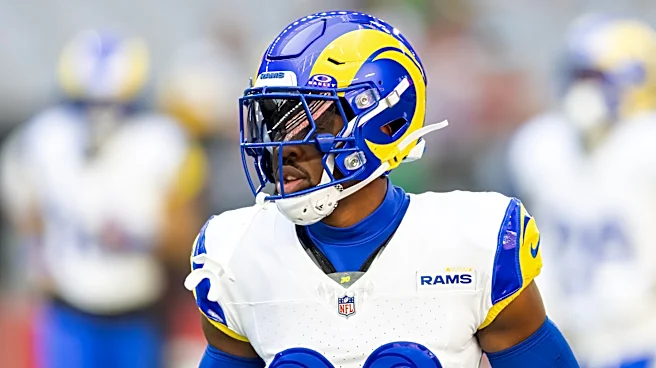
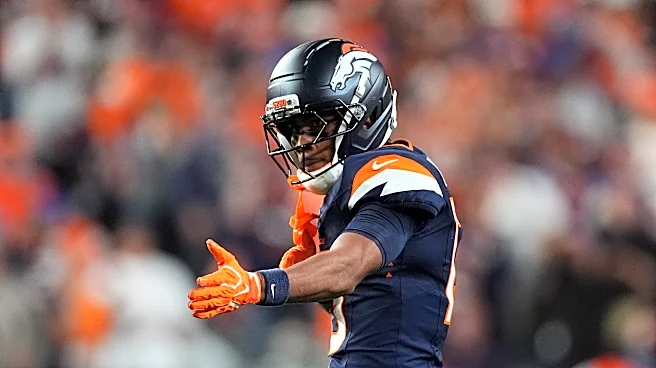
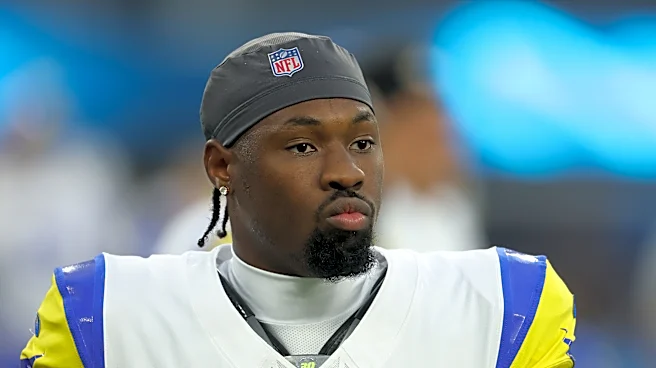
in the game when Rams cornerback Josh Wallace was flagged for interfering with Broncos wide receiver Pat Bryant. This penalty negated Wallace's interception, which would have secured a Rams victory, and instead extended the Broncos' drive. Replays of the incident reportedly showed that Bryant had initiated contact by grabbing Wallace, rather than the other way around. The extended drive allowed the Broncos to score a touchdown, ultimately swinging the game in their favor. McVay had submitted the play for review to the league, a standard procedure for coaches seeking clarification on officiating decisions to better educate their players on techniques and rules. Despite the league's acknowledgment of the error, McVay stated that the finding offered no solace, emphasizing that the game is over and the team must move forward.
Why It's Important?
This incident highlights the significant impact of officiating decisions on the outcome of professional sports games and raises questions about the consistency and accuracy of calls in critical moments. For the Los Angeles Rams, the erroneous call directly contributed to a loss, affecting their season record and potentially their standing in the league. Such decisions can have financial implications for teams, including playoff revenue and player performance bonuses, and can influence public perception of the fairness of the game. For the NFL, acknowledging the error is a step towards transparency, but it also underscores the ongoing challenge of human error in officiating, even with advanced replay technology. The situation could fuel further debate among fans, media, and players regarding the implementation of rules and the need for potential reforms to minimize game-altering mistakes, especially in high-stakes situations. The integrity of the game is paramount, and repeated or significant errors can erode trust in the officiating process.
What's Next?
While the NFL has acknowledged the error, the game's outcome will not be reversed, and the Rams will remain with their 1-2 record. Coach McVay has indicated that his focus is now on moving forward and educating his players based on the feedback received from the league, rather than dwelling on the past call. This suggests that the team will use the incident as a learning opportunity for player technique and understanding of officiating nuances. The league may face continued scrutiny regarding officiating standards, potentially leading to internal discussions about training, review processes, or even rule adjustments to prevent similar situations in the future. Fans and media will likely continue to discuss the implications of such calls, especially as the NFL season progresses and playoff implications become clearer. The Rams are scheduled to play against the Philadelphia Eagles next, and their focus will be on preparing for that matchup.
Beyond the Headlines
The controversy surrounding the pass interference call extends beyond a single game's outcome, touching upon broader themes of fairness, accountability, and the human element in sports. The acknowledgment of an error by the NFL, while a form of accountability, does not alter the tangible result for the affected team, raising ethical questions about justice in competitive sports. This incident also highlights the psychological impact on players and coaches, who must quickly process and move past such setbacks. Furthermore, it contributes to the ongoing discussion about the role of technology in sports officiating, and whether more extensive use of replay or alternative review mechanisms could mitigate human error without unduly disrupting the flow of the game. The public's reaction to such errors can also influence fan engagement and trust in the sport's governing bodies, making consistent and fair officiating crucial for the long-term health and popularity of the NFL.