



What's Happening?
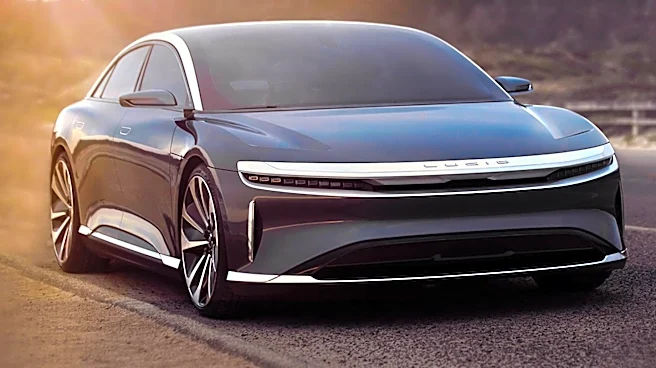
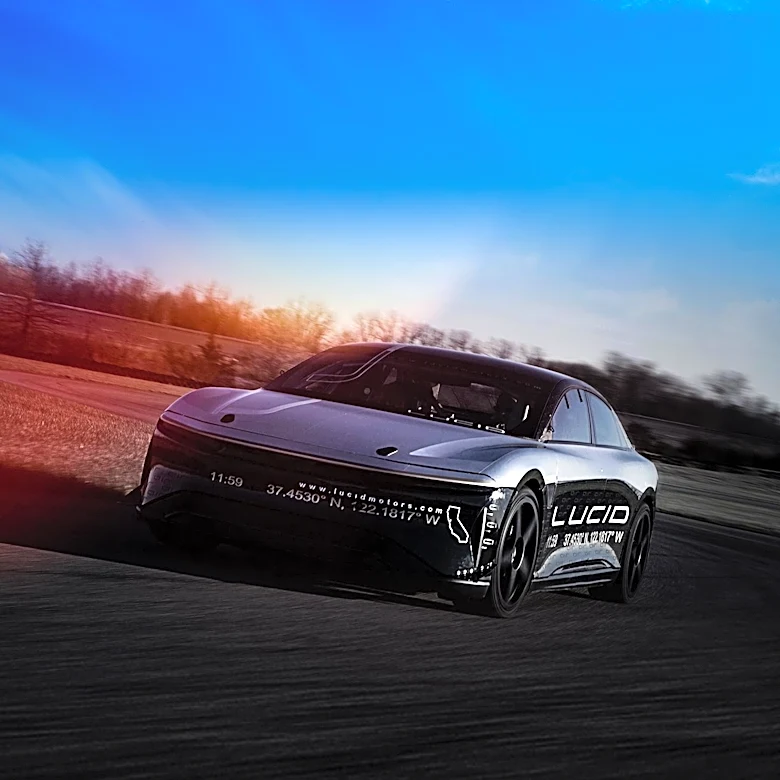
Saudi Arabia has launched Ceer Motors, its first homegrown electric-vehicle manufacturer, which is set to compete with U.S.-based Lucid Motors, a company in which Saudi Arabia's Public Investment Fund (PIF) holds a majority stake. Ceer Motors, majority-owned
by the PIF and a venture with Taiwanese electronics maker Foxconn, unveiled two electric car models, the Exobot sedan and SUV, with deliveries anticipated by March 2027. These vehicles were designed and engineered in Saudi Arabia and will be manufactured at Ceer’s plant in King Abdullah Economic City. The PIF has invested approximately $8 billion into California-based Lucid, which has not yet turned a profit. This development creates an unusual rivalry, as the Saudi wealth fund is now backing two distinct EV brands that will compete in the premium segment, with Ceer's models promising over 1,100 horsepower, comparable to Lucid's high-performance vehicles.
Why It's Important?
This move by Saudi Arabia is significant for the U.S. automotive industry, particularly for Lucid Motors, as it introduces a direct competitor backed by the same primary investor. The PIF's substantial investment in Lucid, coupled with its new venture into Ceer Motors, indicates a strategic diversification within the EV sector. For Lucid, this could mean increased competition for market share, especially in the Middle East where its sales have reportedly declined. The creation of Ceer Motors also highlights Saudi Arabia's ambition to develop an indigenous industrial ecosystem and become a major player in the global EV market, potentially shifting manufacturing and technological development away from traditional automotive hubs. This dual investment strategy by the PIF could impact Lucid's long-term profitability and market valuation, especially if Ceer successfully captures a significant portion of the premium EV market.
What's Next?
Ceer Motors plans to begin production early next year, with more models slated for release over the next five years. The company aims to localize almost half of its components by 2034. The immediate challenge for Ceer will be to establish its brand and compete effectively against established players like Lucid and Chinese manufacturers such as BYD, which currently dominate the Middle Eastern EV market. For Lucid, the focus will likely remain on its restructuring efforts, including cost-saving measures and the delayed launch of mid-range models. The Saudi government's commitment to purchase up to 100,000 Lucid vehicles over ten years provides some stability, but the emergence of Ceer adds another layer of complexity to Lucid's market strategy. Both companies will be vying for market share in a region with significant growth potential, and their respective performances will be closely watched by industry observers.
Beyond the Headlines
The emergence of Ceer Motors, backed by the Saudi PIF, alongside the PIF's existing majority stake in Lucid, reveals a complex geopolitical and economic strategy. This isn't merely about creating another car company; it's about Saudi Arabia's broader vision for economic diversification away from oil, known as Vision 2030. By fostering an indigenous automotive industry, the kingdom aims to create jobs, develop local expertise, and establish itself as a manufacturing hub. The potential for overproduction, with combined full-capacity targets far exceeding domestic demand, suggests an export-oriented strategy targeting the Gulf, North Africa, and beyond. This could lead to increased competition in international EV markets, potentially impacting global supply chains and pricing strategies. The reliance on established suppliers for key components, while leveraging long-term funding and policy backing, presents a unique model for new entrants in the highly competitive EV sector, challenging traditional notions of automotive development and market entry.