


What's Happening?
The National Kitchen & Bath Association (NKBA) has released its 2027 Kitchen Trends Report, based on a survey of 830 kitchen-industry professionals including designers, manufacturers, remodelers, and architects. The report indicates a significant shift
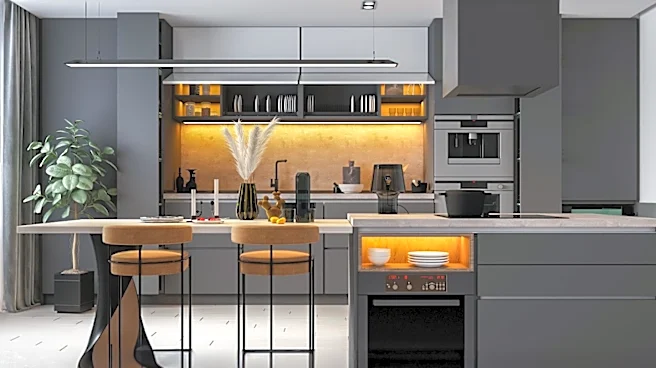
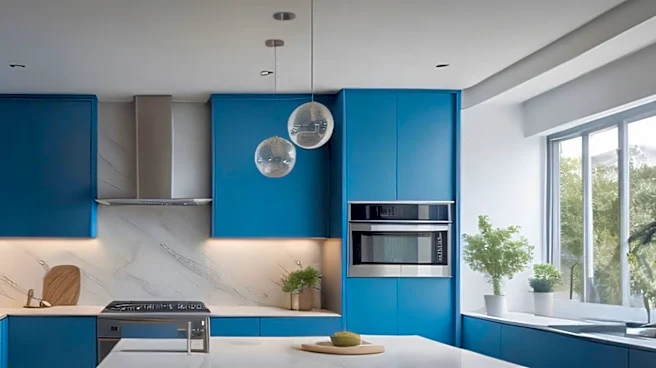
in kitchen design preferences, moving away from open layouts towards more defined spaces. Eighty-five percent of designers anticipate appliances being integrated into cabinetry, and roughly two-thirds expect open shelving to be replaced by enclosed storage. Pantries are evolving into multifunctional extensions of the kitchen, with nearly 90 percent of designers agreeing on this trend, and three-quarters expecting dedicated small-appliance stations to become popular. Separate beverage areas are also gaining support, with 90 percent anticipating their popularity. The report also highlights a growing interest in partial walls, movable partitions, and separate kitchen zones, a departure from previous forecasts that favored open-concept designs. Dedicated prep spaces and back kitchens are emerging features, cited by nearly half of the designers surveyed.
Why It's Important?
This shift in kitchen design trends has significant implications for the U.S. home renovation and construction industries. Manufacturers of kitchen appliances and cabinetry will need to adapt their product lines to accommodate the demand for integrated and hidden solutions. The move towards more defined layouts and specialized zones within the kitchen could lead to increased demand for custom cabinetry and built-in features, potentially boosting the market for skilled tradespeople and custom design services. Homeowners considering renovations will likely be influenced by these trends, impacting their choices in materials, layouts, and appliance selections. The emphasis on functionality and enclosed storage also suggests a consumer preference for less visual clutter and more organized living spaces, which could drive innovation in storage solutions and smart home integration within the kitchen environment. This report provides a crucial roadmap for businesses and consumers alike, shaping future investments and design decisions in the U.S. housing market.
What's Next?
Over the next three years, the U.S. kitchen design and construction sectors are expected to see a continued evolution in response to these forecasted trends. Kitchens are projected to grow in size, with 52 percent of designers anticipating this expansion. Furthermore, surrounding rooms like mudrooms and laundry spaces are increasingly being integrated into kitchen plans, with the vast majority of designers expecting attached mudrooms to be popular. Forty-five percent anticipate larger mudrooms, and 43 percent foresee growing laundry spaces. This suggests a broader trend towards creating more comprehensive and functional home hubs. Manufacturers and designers will likely focus on developing innovative solutions for hidden appliances, versatile pantry systems, and integrated storage to meet consumer demand. The report's findings will likely guide product development, marketing strategies, and architectural planning across the U.S. home improvement industry.
Beyond the Headlines
The move towards more defined kitchen layouts and hidden appliances reflects a deeper cultural shift in how Americans perceive and utilize their homes. This trend could signify a desire for greater order and tranquility in personal spaces, moving away from the constant visual stimulation of open-concept living. The integration of mudrooms and laundry areas into kitchen plans also points to a growing emphasis on efficiency and multi-functionality within the home, reflecting busy lifestyles and a need for streamlined domestic operations. This evolution in design may also be influenced by a desire for more personalized and private spaces, offering a retreat from the increasingly public nature of modern life. The report hints at a future where homes are not just aesthetically pleasing but also highly organized, efficient, and tailored to individual needs, potentially influencing broader architectural and interior design philosophies in the U.S.