

What's Happening?
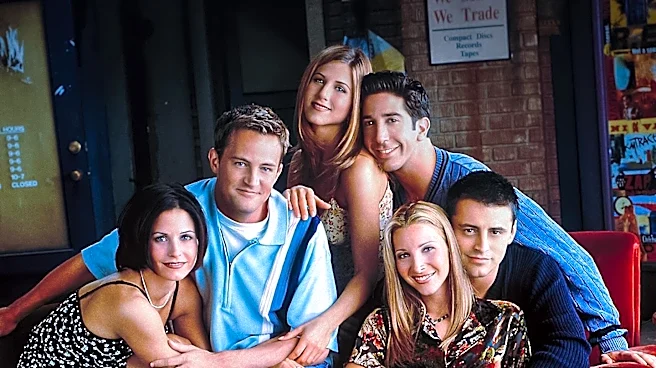
The casting process for the hit television series 'Friends' nearly resulted in a completely different ensemble, with several prominent actors almost securing iconic roles. Courteney Cox, who ultimately played Monica Geller, was initially considered for Rachel
Green but advocated for the role of Monica, believing she related more to the character. Jennifer Aniston, who became Rachel, almost couldn't take the part due to a prior commitment to another show. The role of Monica was originally envisioned for Janeane Garofalo, with a 'darker, edgier, and snarkier' personality, before Cox softened the character. Matthew Perry, cast as Chandler Bing, was the first choice but was tied to another pilot, 'LAX 2194,' leading to other actors like Craig Bierko and Jon Favreau being considered. David Schwimmer, who played Ross Geller, was offered the role without an audition as creators Marta Kauffman and David Crane wrote the part with him in mind, though he initially hesitated due to a previous negative TV experience. Hank Azaria auditioned twice for Joey Tribbiani, a role that eventually went to Matt LeBlanc, and Lisa Kudrow was fired from 'Frasier' before landing the role of Phoebe Buffay.
Why It's Important?
The detailed account of 'Friends' casting near misses underscores the serendipitous nature of television production and the critical role of actor chemistry in a show's success. The eventual cast's unique dynamic is widely credited for the series' enduring popularity and cultural impact, making it one of the most streamed and beloved shows globally. This narrative highlights how different choices could have drastically altered the show's tone and legacy, demonstrating that the right combination of talent can create an irreplaceable cultural phenomenon. For the entertainment industry, this story serves as a case study in casting, illustrating that sometimes the 'perfect fit' emerges through unexpected turns and actors' self-advocacy. It also showcases the intense competition for roles in major productions and the resilience required by actors like Hank Azaria and Lisa Kudrow, who found success in other capacities within the same show or after initial setbacks. The show's ability to resonate with millions for decades is a testament to the magic created by its specific ensemble, proving that certain creative alignments are truly lightning in a bottle.
What's Next?
While 'Friends' concluded its run years ago, the ongoing fascination with its production details, such as casting stories, continues to fuel its legacy and fan engagement. These revelations contribute to the show's rich behind-the-scenes lore, which is often explored in documentaries, interviews, and fan discussions. The enduring popularity of 'Friends' ensures its continued presence in syndication and on streaming platforms, allowing new generations to discover and appreciate the unique chemistry of its cast. The insights into the casting process may also influence future television productions, encouraging creators to consider unconventional choices or to trust their instincts when an actor's personality aligns perfectly with a character, even if it means redefining the role. The story of 'Friends' casting will likely remain a benchmark for discussions about ensemble dynamics and the unpredictable path to creating a cultural touchstone in television history.
Beyond the Headlines
Beyond the surface-level anecdotes, the 'Friends' casting story offers deeper insights into the creative process and the human element of artistic collaboration. The initial vision for characters, such as Monica being 'darker' or Rachel being played by Courteney Cox, reveals how roles evolve through interaction with actors. This iterative process highlights that characters are not static entities but are shaped by the performers who embody them, often leading to richer, more nuanced portrayals than initially conceived. The narrative also touches upon the psychological aspects of rejection and perseverance in a highly competitive industry, as seen with actors like Mitchell Whitfield, who gracefully accepted a smaller role after being considered for a lead. Furthermore, the emphasis on 'chemistry' as the ultimate determinant for casting speaks to an intangible quality that transcends individual talent, suggesting that successful ensembles possess a collective energy that is greater than the sum of its parts. This phenomenon underscores the collaborative nature of storytelling and the profound impact that interpersonal dynamics can have on a creative work's resonance and longevity.