
What's Happening?
The U.S. Commerce Department has officially added Megaspeed, a Singapore-based company, to its Entity List. This action, taken on Monday, November 23, means that U.S. companies are now required to obtain
a government license to sell certain technologies, particularly semiconductors, to Megaspeed and its foreign affiliates. The decision follows weeks of internal debate within the Trump administration, with Treasury Secretary Scott Bessent advocating for quicker action. The move comes amidst an ongoing investigation by the Justice Department into whether Megaspeed violated U.S. export controls by allegedly shipping Nvidia chips to China. Seven entities in total, including various affiliates of Megaspeed such as MSFusion, Speedmatrix, Apex Enterprise Solutions, and Swiftdata, were added to the list from Singapore, Malaysia, and Thailand. The Commerce Department's Bureau of Industry and Security stated that these additions are due to a significant risk of these entities being involved in the diversion of advanced computing commodities to unauthorized end-users or uses. Licenses for sales to these entities will be reviewed under a presumption of denial, though technology exports already en route will be permitted to proceed.
Why It's Important?
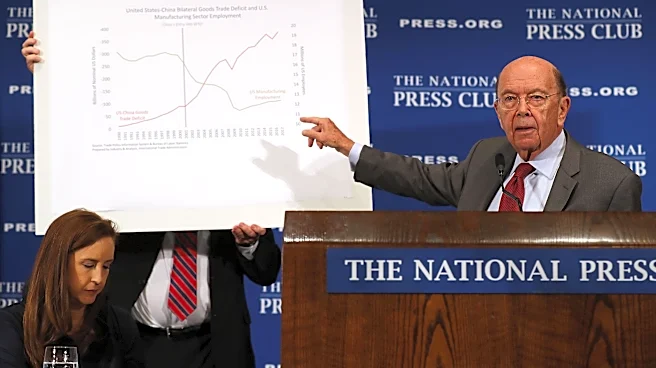
The addition of Megaspeed to the Entity List signifies a significant escalation in the U.S. government's efforts to control the export of critical technologies, especially semiconductors, to entities perceived as national security risks. This measure directly impacts U.S. semiconductor manufacturers and technology companies, as they will now face stricter regulations and potential revenue losses from sales to Megaspeed and its affiliates. The move underscores the Trump administration's commitment to safeguarding advanced computing capabilities and preventing their diversion to unauthorized end-users, particularly in the context of geopolitical competition. It also highlights the ongoing tensions within the administration regarding the pace and scope of such trade restrictions, as evidenced by the public disagreement between Treasury Secretary Scott Bessent and Commerce Secretary Howard Lutnick. The investigation into Megaspeed's alleged violation of export controls by shipping Nvidia chips to China further emphasizes the strategic importance of semiconductor technology and the U.S. government's determination to enforce its export regulations.
What's Next?
Following Megaspeed's inclusion on the Entity List, U.S. companies seeking to conduct business with Megaspeed or its affiliates will need to apply for specific licenses from the Commerce Department, which will likely be difficult to obtain given the 'presumption of denial.' This will likely lead to a re-evaluation of supply chains and business relationships for many U.S. technology firms. The Justice Department's investigation into Megaspeed's alleged export control violations is expected to continue, and its findings could lead to further legal actions or sanctions. The broader implications for the semiconductor industry include increased scrutiny of international sales and a potential shift in global supply chain dynamics as companies adapt to stricter U.S. export controls. Additionally, the decision may prompt reactions from other countries and international bodies, potentially leading to further discussions or disputes regarding trade policies and technology transfers.
Beyond the Headlines
This action extends beyond immediate trade restrictions, reflecting a deeper strategic imperative by the U.S. to maintain its technological edge and address national security concerns related to advanced computing. The focus on semiconductors, critical components for artificial intelligence and military applications, indicates a long-term strategy to limit the technological advancement of potential adversaries. The internal debates within the Trump administration, particularly between the Treasury and Commerce Departments, reveal the complex interplay of economic interests, national security concerns, and bureaucratic processes in shaping U.S. trade policy. This event also highlights the increasing role of intelligence and counter-intelligence in trade decisions, as evidenced by the scrutiny surrounding the relationship between Nvidia's CEO and an alleged Chinese spy. The broader impact could include a more fragmented global technology landscape, with countries increasingly seeking to develop independent supply chains for critical components, potentially leading to a 'decoupling' of technological ecosystems.