



What's Happening?
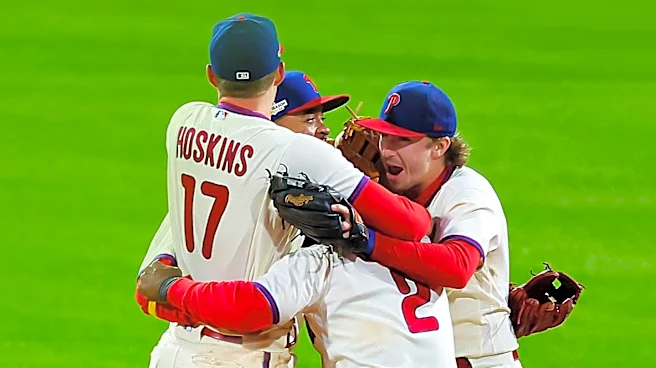
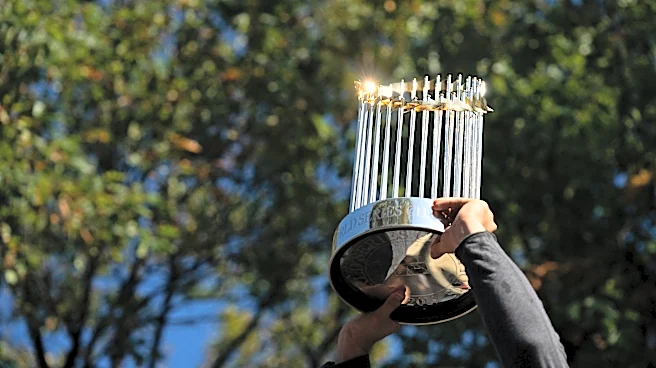
Philadelphia Phillies owner John Middleton is under observation as the team has spent $1.4 billion on player salaries since 2022 without securing a championship trophy. This significant investment in player payroll highlights a broader discussion within
Major League Baseball (MLB) regarding competitive balance and the effectiveness of high spending. While MLB Commissioner Rob Manfred suggests a strong correlation between market size, payroll, and playoff success, the Phillies' situation, alongside other teams like the New York Yankees and Mets, indicates that substantial financial outlay does not guarantee a World Series win. The ongoing debate about a potential salary cap in MLB further underscores the financial dynamics at play, with owners pushing for cost controls and players resisting, viewing it as a means to suppress salaries.
Why It's Important?
The Phillies' substantial spending without a championship trophy is important because it challenges the narrative that higher payrolls automatically lead to success in MLB. This situation fuels the ongoing labor dispute between MLB owners and players, particularly concerning the implementation of a salary cap. Owners, including figures like Commissioner Manfred, argue that a salary cap would address competitive imbalance and ensure more teams have a chance to contend. However, players and their union view a salary cap as a mechanism to fix costs and boost franchise values at the expense of player earnings. The outcome of this debate could significantly alter the economic landscape of professional baseball, impacting player contracts, team valuations, and the competitive structure of the league. For fans, it raises questions about the fairness and excitement of the sport if financial disparities continue to grow or if a salary cap stifles player movement and team building.
What's Next?
The ongoing labor negotiations between MLB owners and players are expected to intensify, particularly as the current collective bargaining agreement approaches its expiration. The central point of contention remains the owners' push for a salary cap, which players vehemently oppose. If an agreement is not reached, a lockout, similar to the one in 2021-22, could occur, potentially delaying or disrupting future seasons. This would have significant financial implications for both the league and its players, as well as impact fan engagement. The Phillies' continued high spending and pursuit of a championship will likely be a case study in these discussions, demonstrating the challenges and potential inefficiencies of the current financial system in MLB. The resolution of these negotiations will determine the future economic model of the sport.
Beyond the Headlines
The Phillies' situation, characterized by high spending and a lack of a championship, delves into deeper implications concerning the philosophy of sports ownership and the nature of competition in professional leagues. It raises ethical questions about the balance between financial investment and competitive integrity. While some owners, like John Middleton, are willing to spend heavily to win, others may prioritize profitability or a more measured approach. This disparity can lead to a perception of an uneven playing field, potentially alienating fans of smaller-market teams. The debate over a salary cap also touches upon the broader economic principles of labor and capital within sports, highlighting the tension between maximizing player earnings and ensuring the financial stability and competitive balance of the league. The long-term impact could reshape how teams are built, how players are compensated, and ultimately, the fan experience in MLB.