








What's Happening?
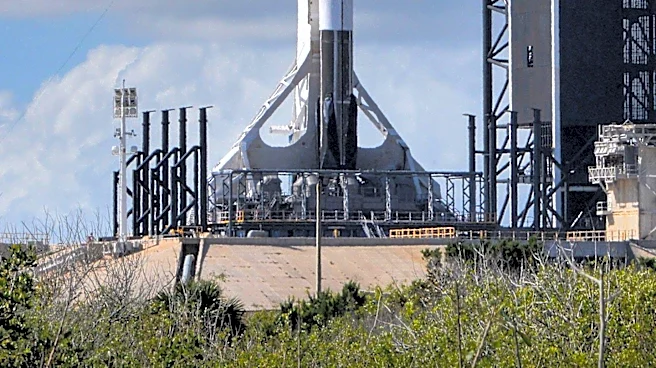
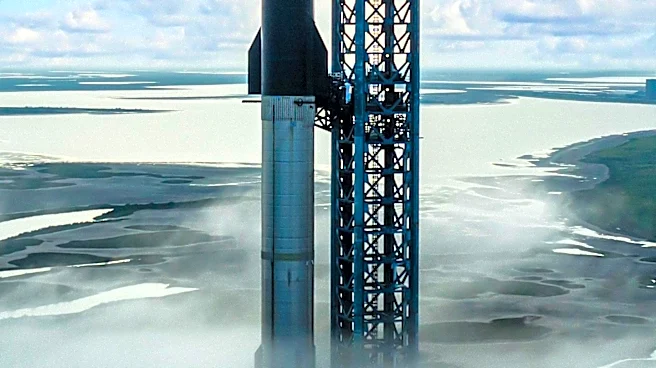
SpaceX has moved the Super Heavy booster, designated Booster 20, to Orbital Launch Pad 2 at Starbase, Texas, in preparation for Starship Flight 13. This marks the beginning of the pre-flight test campaign for the 13th integrated test flight of the Starship,
which is the world's most powerful rocket. The move was confirmed by SpaceX on July 9, 2026, and the launch is tentatively scheduled for July 14, 2026. However, a crucial booster static fire test is yet to be conducted, which will determine if the launch can proceed as planned. The upper stage, Ship 40, has already completed a static fire test of its six Raptor engines, clearing a significant hurdle for the mission.
Why It's Important?
The rapid pace at which SpaceX is conducting these test flights is significant for several reasons. Each flight provides valuable operational data that is essential for certifying the Starship for commercial payloads and future NASA missions, including the Artemis lunar landing mission. The ability to quickly turn around flights and gather data is crucial for SpaceX's long-term goals of making space travel more routine and accessible. The success of these tests could have a profound impact on the space industry, potentially lowering costs and increasing the frequency of space missions.
What's Next?
The next critical step for SpaceX is the static fire test of Booster 20's 33 Raptor engines, which will generate nearly 20 million pounds of thrust. This test is essential for clearing the vehicle for flight. The Federal Aviation Administration (FAA) has issued advisories for a No Earlier Than (NET) launch date of July 14, 2026, with additional NOTAMs covering Mexican airspace starting July 15. These dates are contingent on the successful completion of the static fire test and any necessary regulatory approvals.