



What's Happening?
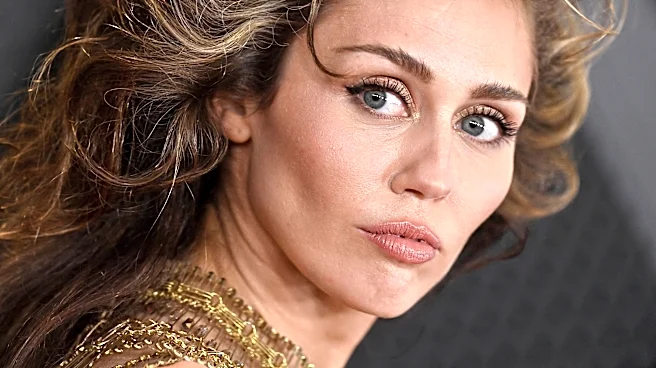
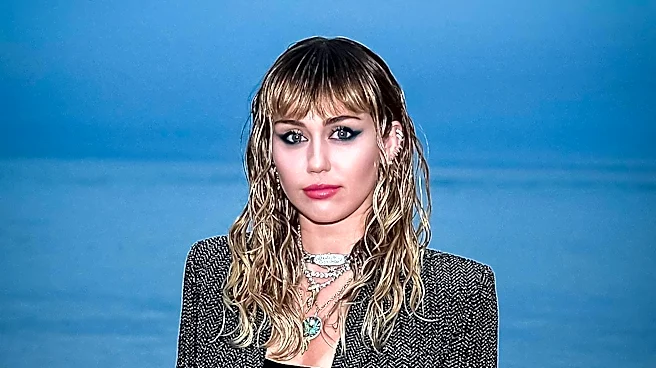
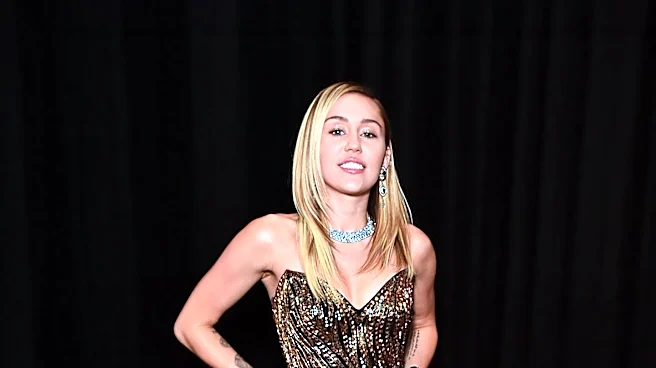
Miley Cyrus and Maxx Morando were married on Saturday, November 21, in Palm Springs, California, in an intimate ceremony with a strict all-black dress code for guests. However, an aerial photograph of the wedding revealed one guest prominently standing
out in a golden-rust-colored gown, sparking widespread online discussion and criticism. The guest was later identified as Belgica Vargas, wife of Canadian music producer Shawn Everett, a frequent collaborator with Cyrus. Vargas's sister, Grecia, defended her, stating that Vargas had seen the invitation two months prior but had missed the dress code memo. Grecia also mentioned that Miley Cyrus herself was not bothered by the dress code deviation, and the family found humor in the internet's reaction.
Why It's Important?
This incident highlights the growing influence of social media and public scrutiny on private events, even those involving celebrities. The immediate and widespread online reaction to a perceived breach of etiquette at a high-profile wedding underscores how quickly public opinion can form and spread in the digital age. For celebrities, maintaining a desired public image extends even to the details of their personal celebrations, as every aspect can become fodder for discussion. The event also touches on broader societal expectations regarding dress codes and social norms, particularly in formal settings. The defense offered by Vargas's sister, attributing the oversight to a missed detail on the invitation, points to the challenges of communicating and adhering to specific event requirements, even among close associates.
What's Next?
While the immediate online debate surrounding the dress code has likely subsided, the incident serves as a reminder for event planners and attendees, especially in celebrity circles, about the importance of clear communication regarding event expectations. For future high-profile events, organizers might consider more explicit or redundant methods of communicating dress codes to avoid similar situations. For guests, it emphasizes the need for careful review of invitations and, if uncertain, proactive communication with hosts. The event is unlikely to have any lasting negative impact on Miley Cyrus or her marriage, as her reported nonchalance suggests it was a minor detail in the context of her wedding day. However, it contributes to the ongoing narrative of celebrity culture and the public's fascination with every aspect of their lives.
Beyond the Headlines
Beyond the immediate social media buzz, this incident subtly reflects on the evolving nature of etiquette and social conformity in contemporary culture. While traditional events often come with unspoken or explicit rules, the digital age amplifies any deviation, turning personal choices into public spectacles. The 'all-black' dress code itself, while a stylistic choice, also functions as a form of collective identity for the event, and a single contrasting element can disrupt this visual unity. The public's strong reaction, ranging from criticism to defense, reveals underlying societal values about respect for hosts, attention to detail, and the perceived importance of adhering to established norms. It also highlights the double-edged sword of celebrity, where personal moments are inevitably subjected to public interpretation and judgment, often detached from the actual sentiments of those involved.