






What's Happening?
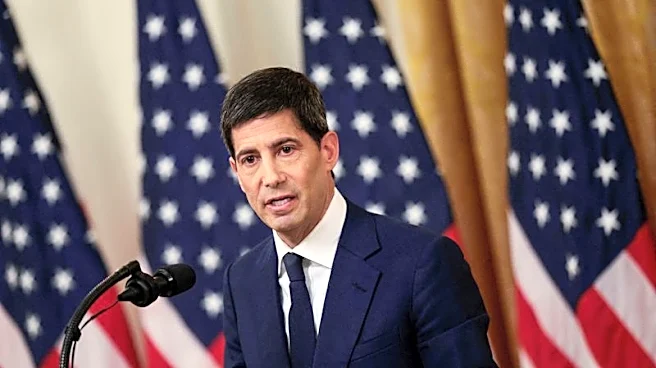
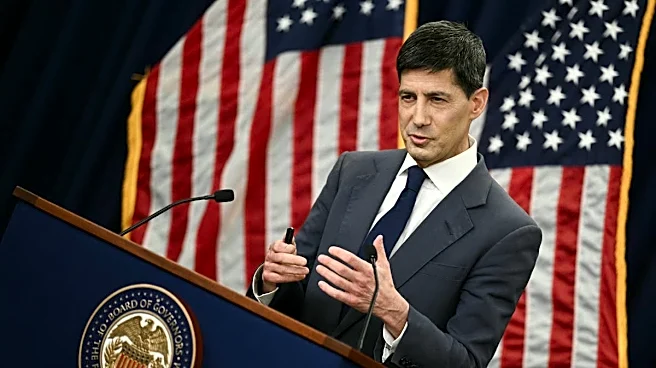
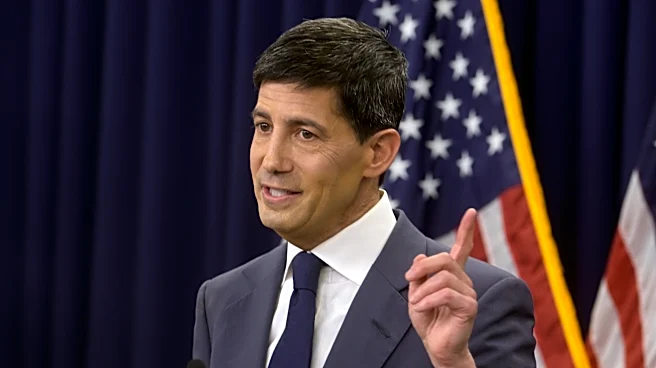
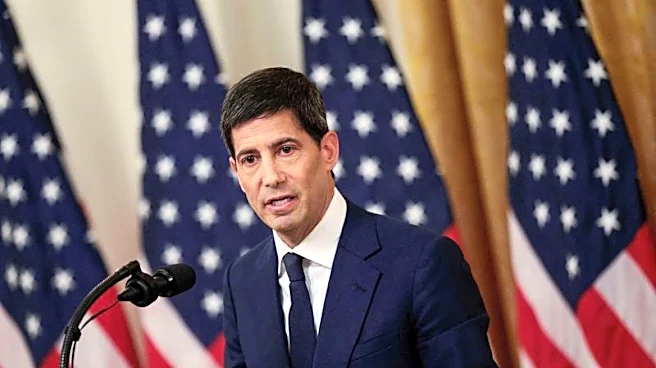
In his first meeting as Chairman, Kevin Warsh led the Federal Reserve to maintain the federal funds rate at 3.5% to 3.75%. The decision was unanimous among the Federal Open Markets Committee members, with nine out of 18 projecting a rate hike by the end
of the year. Warsh's approach marks a shift from his predecessor, Jerome Powell, as he aims to emulate former Chair Alan Greenspan. The Fed's statement highlighted strong economic activity and job growth, despite uncertainties from the Middle East conflict. Warsh has indicated a move away from forward guidance, encouraging markets to focus on real-time data rather than Fed predictions.
Why It's Important?
Warsh's leadership signals a potential shift in the Fed's approach to monetary policy, which could have significant implications for financial markets and the broader economy. By reducing reliance on forward guidance, the Fed may introduce more uncertainty into market expectations, affecting investment strategies and economic forecasts. The potential rate hike reflects confidence in economic growth but also raises concerns about inflation and borrowing costs. Warsh's emphasis on real-time data could lead to more dynamic and responsive monetary policy decisions.
What's Next?
The Fed will continue to evaluate its communication strategies, with potential changes expected by the end of the year. Warsh's task forces will review key areas such as data usage, inflation frameworks, and the Fed's balance sheet. These reviews could lead to significant policy shifts, impacting how the Fed manages economic challenges. Market participants will be closely watching for updates on these initiatives, as they could influence future interest rate decisions and economic stability.