
What's Happening?
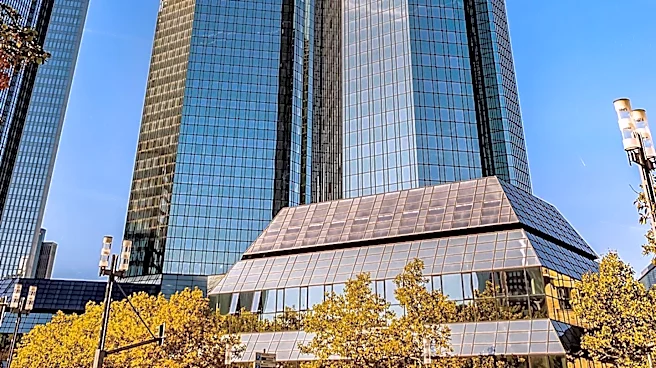
Deutsche Bank is under scrutiny for its continued business relationship with Vitol, the world's largest independent oil trader, particularly concerning transactions in Libya. Despite having faced a $58
million fine in 2015 for US sanctions-related penalties involving Libya, Deutsche Bank reportedly explored facilitating a deal for Vitol to purchase crude oil from Libya in February 2018. Internal discussions within the bank revealed reservations among some employees due to Libya's instability and Vitol's history of dealing with rebel forces during the 2011 uprising. However, the prospect of significant profits, estimated at $45 million per month, seemingly outweighed these concerns, especially since the transaction involved Libya’s state-owned National Oil Corporation (NOC). This information comes from the 'Inside Deutsche Bank' investigation, a cross-border project based on a large leak of banking records.
Why It's Important?
This situation highlights the persistent challenges financial institutions face in balancing profit motives with regulatory compliance and ethical considerations, especially in high-risk regions. Deutsche Bank's continued engagement with Vitol in Libya, despite past penalties and Vitol's controversial history—including dealings with sanctioned entities and bribery scandals—raises questions about the effectiveness of internal risk management and due diligence processes. For the U.S., such dealings can undermine the integrity of international sanctions regimes and potentially contribute to instability in conflict-prone areas. The involvement of major banks in transactions with companies operating in politically sensitive markets can have far-reaching implications for global financial stability and the enforcement of international law. It also underscores the difficulty in tracking and regulating the activities of large, privately held trading companies like Vitol.
What's Next?
The 'Inside Deutsche Bank' investigation is ongoing, and further revelations could emerge, potentially leading to increased regulatory scrutiny and calls for stricter enforcement of financial regulations. Deutsche Bank's response, stating it applies 'risk-based due diligence, screening and ongoing monitoring procedures,' suggests it will likely defend its practices. However, the public disclosure of these internal discussions could pressure the bank to re-evaluate its risk assessment frameworks and its relationships with controversial entities. Regulators in the U.S. and Europe may intensify their oversight of financial institutions' dealings in high-risk jurisdictions and with companies that have a history of sanctions violations or unethical conduct. This could lead to new compliance requirements or enforcement actions.
Beyond the Headlines
The case of Deutsche Bank and Vitol delves into the deeper ethical and legal complexities of global finance. It exposes how the allure of substantial profits can sometimes overshadow concerns about political instability, human rights, and adherence to international norms. Vitol's extensive operations in conflict zones and its history of controversial transactions, including alleged payments to a Serbian paramilitary leader and bribery in Latin America, raise fundamental questions about corporate accountability in the globalized economy. The fact that such a large and influential company operates without public listing further complicates oversight. This situation underscores the need for greater transparency and more robust international cooperation to prevent financial institutions from inadvertently or intentionally facilitating activities that undermine global security and ethical standards.