




What's Happening?
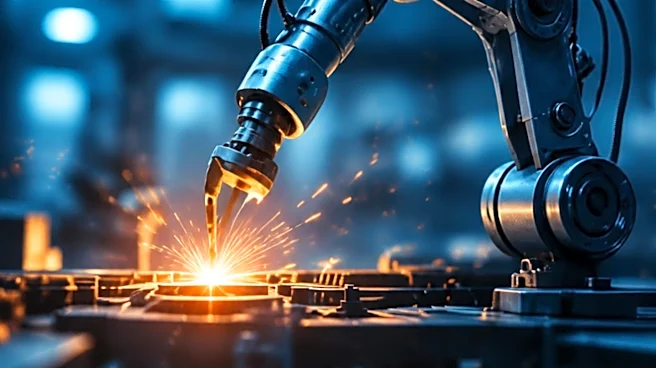
New U.S. orders for metal cutting, forming, and fabrication machinery, collectively known as manufacturing technology, reached $1.007 billion in September 2026. This represents a substantial 38.0% increase from August and a 101.7% year-over-year spike.
The surge was largely attributed to orders placed at the biennial International Manufacturing Technology Show (IMTS), held from September 14-19 in Chicago. According to the Association for Manufacturing Technology (AMT) and its U.S. Manufacturing Technology Orders (USMTO) report, September's investment set a new monthly record, surpassing the previous peak in December 2025 by 22.5%. This marks the seventh consecutive month that orders have exceeded $500 million, the longest such streak recorded by the USMTO. Year-to-date orders through September reached $5.76 billion, a 45.0% increase over the first three quarters of 2025.
Why It's Important?
This significant increase in manufacturing technology orders signals a robust appetite for automation and investment within U.S. industries. The sustained growth, with orders exceeding $500 million for seven consecutive months, indicates a strong commitment from companies to enhance their production capabilities and efficiency. This trend is particularly evident in contract machine shops, the largest customer industry, which saw record investments in September. The aerospace sector also demonstrated accelerated investment, with both the value and number of machine orders reaching record levels. For the broader U.S. economy, increased investment in manufacturing technology can lead to higher productivity, job creation in skilled labor sectors, and enhanced competitiveness on a global scale. It also suggests that manufacturers are actively addressing capacity constraints and modernizing their operations.
What's Next?
The AMT report suggests that manufacturing technology orders are likely to remain elevated through the remainder of 2026 and into 2027, although with potential variations in customer industry mix. The resilience of demand is attributed to a growing appetite for automation, demand from industries with long backlogs, and sustained defense production. Even if overall capital investment experiences a downturn, the current high demand for machined parts and elevated capacity utilization could convert leads generated at IMTS 2026 into additional orders in the coming months. However, a potential shift in the trend, where the number of units ordered grows faster than the value, could indicate growing capacity constraints among machinery manufacturers, potentially pushing buyers towards options with shorter lead times, even if it means foregoing some advanced features.
Beyond the Headlines
The surge in manufacturing technology orders reflects a deeper strategic shift within U.S. industries towards advanced automation and digital transformation. This investment is not merely about increasing output but also about improving precision, reducing labor costs, and enhancing supply chain resilience. The emphasis on automation can lead to a more skilled workforce, requiring new training and education programs to meet the demands of advanced manufacturing. Furthermore, the sustained investment in sectors like aerospace and defense highlights national priorities related to technological superiority and security. This trend could also influence regional economic development, as manufacturing hubs that embrace these technologies are likely to attract further investment and talent, potentially reshaping the industrial landscape of the United States.