



What's Happening?
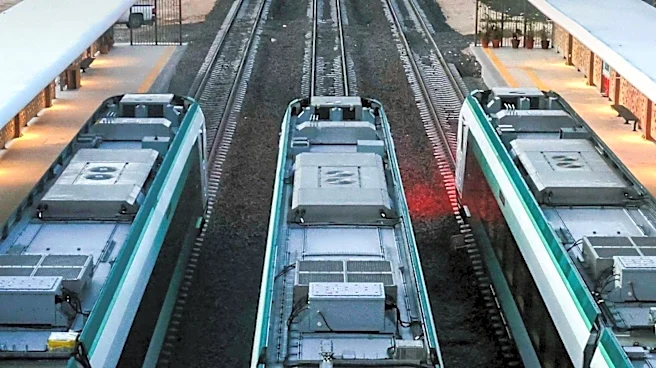
Martin County officials are actively seeking federal funding to advance plans for a Brightline passenger rail station in downtown Stuart, Florida. Despite a recent missed federal grant opportunity and opposition from Florida East Coast Railway, which
owns the tracks, county leaders remain committed to the project. The proposed station, planned for 500 SE Flagler Ave., would be a 10,200-square-foot facility on just over two acres, significantly smaller than Brightline's major hubs. Martin County has pledged up to $15 million towards construction, but officials acknowledge that substantial federal assistance is necessary for the project to proceed. Representative Brian Mast has questioned the taxpayer burden, suggesting Brightline should contribute more financially. Brightline itself has reported slower-than-projected passenger growth. Meanwhile, Brevard County secured nearly $57 million in federal funds for a Cocoa Beach area station, and Martin County received nearly $79 million for the St. Lucie River railroad bridge replacement.
Why It's Important?
The development of a Brightline station in Stuart holds significant implications for regional transportation, economic development, and local commerce. Direct rail access to major Florida destinations like Miami and Orlando could boost tourism and provide residents with convenient travel options, potentially reducing road congestion. Local businesses, particularly in downtown Stuart, anticipate increased economic activity from visitors arriving by train, which could help small businesses compete in a challenging retail environment. However, the project faces substantial financial hurdles, with a heavy reliance on federal funding, raising questions about cost-sharing between public and private entities. The opposition from Florida East Coast Railway highlights potential operational conflicts and challenges in integrating new passenger services with existing freight rail infrastructure. The success or failure of this project could influence future high-speed rail expansion efforts across the Treasure Coast and other U.S. regions.
What's Next?
Martin County anticipates another major federal grant cycle this fall and plans to apply for the necessary funding to move the Brightline station project forward. Without significant federal support, officials concede that the proposal could face further delays or be abandoned. The recently secured federal funding for the St. Lucie River railroad bridge replacement, which will create a new double-track bridge, is hoped to strengthen the case for a Stuart station by improving overall rail operations. If the Stuart plan stalls, other Treasure Coast communities, such as Fort Pierce, could emerge as alternative locations for a future Brightline stop. The ongoing discussions with Brightline, despite the railway's opposition, indicate continued efforts to find a resolution. The outcome of the upcoming federal grant cycle will be a critical determinant for the project's future viability.
Beyond the Headlines
The challenges faced by Martin County in securing a Brightline station reflect broader issues in U.S. infrastructure development, particularly for high-speed rail. The reliance on federal funding, coupled with private sector operational concerns and financial performance, underscores the complex interplay between public investment and private enterprise in large-scale transportation projects. The debate over taxpayer funding versus private contributions highlights differing philosophies on who should bear the financial risk and benefit from such ventures. Furthermore, the competition among communities for Brightline stops illustrates the perceived economic advantages associated with improved connectivity and accessibility. This situation also brings to light the intricate process of coordinating between local governments, federal agencies, and private railway companies, often involving navigating regulatory hurdles, land use issues, and community interests. The long-term success of Brightline and similar projects will depend on effective collaboration and sustainable funding models.