





What's Happening?
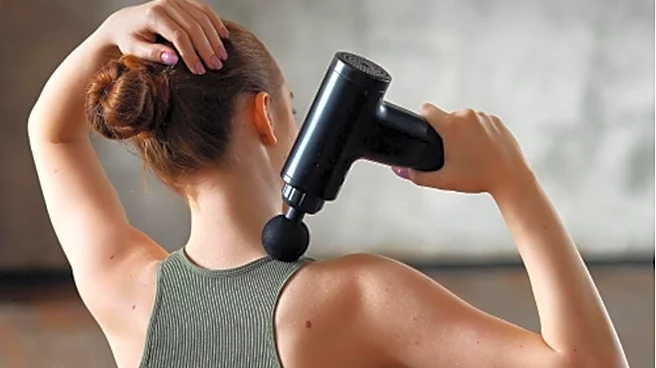
The choice between a massage gun and a massage pillow for home use depends on the user's specific needs for reach, effort, and pressure control. According to Bestqool, a massage gun offers precise placement control, allowing users to guide it across specific spots
or move between areas without repositioning. This requires grip, arm movement, and attention, and reaching one's own back can be awkward, sometimes necessitating assistance. In contrast, a massage pillow provides fixed coverage; users position it against a chair or support and settle against it. This reduces the need for continuous steering but requires arranging the body and support to keep the pillow in a useful position. The effectiveness of either device hinges on the user's ability to comfortably repeat the necessary movements and set up the device securely.
Why It's Important?
This comparison highlights the evolving landscape of at-home muscle recovery and pain relief solutions, offering consumers distinct options based on their physical capabilities and therapeutic needs. The flexibility of a massage gun allows for highly targeted treatment, which is crucial for athletes or individuals with specific muscle knots. Conversely, the hands-free nature of a massage pillow, once positioned, offers a more passive experience suitable for broader muscle relaxation, particularly for those with limited mobility or who find holding a device tiring. Understanding these differences is vital for consumers to make informed choices that align with their comfort levels and desired outcomes, preventing the purchase of devices that may prove inconvenient or ineffective for their personal use. This distinction also underscores the importance of ergonomic considerations in personal wellness technology.
What's Next?
As consumer demand for convenient and effective at-home therapy grows, manufacturers will likely continue to refine both massage gun and massage pillow designs. Future innovations may focus on enhancing ergonomics for massage guns, making them lighter and easier to maneuver for hard-to-reach areas, possibly through more advanced handle designs or even robotic assistance. For massage pillows, advancements could include more adaptable shapes, adjustable pressure zones, and integrated smart features that conform to individual body contours. The market may also see hybrid devices that combine the targeted precision of a gun with the broader, hands-free coverage of a pillow. Educational resources will also become increasingly important to guide consumers in selecting the most appropriate device for their specific needs and physical limitations.
Beyond the Headlines
The divergence in design and application between massage guns and pillows reflects a broader trend in personal health technology: customization and user-centric design. This isn't just about muscle relief; it's about empowering individuals to manage their physical well-being with tools tailored to their unique circumstances. The choice between active manipulation (gun) and passive positioning (pillow) speaks to different philosophies of self-care and accessibility. For some, the active engagement of a massage gun provides a sense of control and efficacy, while for others, the ease and relaxation offered by a pillow are paramount. This segmentation of the market underscores a growing recognition that 'one size fits all' solutions are often insufficient in personal health, driving innovation towards more specialized and user-friendly devices that cater to a diverse range of needs and preferences.