


What's Happening?
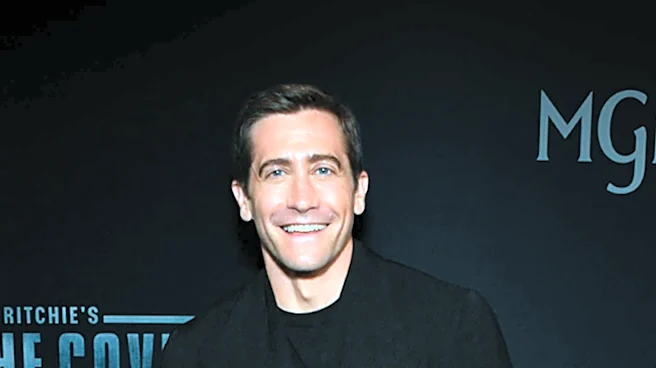
Actor and writer Seth Rogen recently shared his initial reservations regarding Jake Gyllenhaal's acting choices in the 2001 film 'Donnie Darko'. Rogen, who played Ricky Danforth in the movie, recalled seeing Gyllenhaal on set and questioning how his portrayal
of the leading character would be received. He noted that Gyllenhaal 'wasn't playing this charming version of it,' as detailed in The New York Times' oral history of the film. Despite these early doubts, Rogen eventually came to admire Gyllenhaal's approach, recognizing the depth of thought Gyllenhaal invested in his performance. Rogen also admitted to having general concerns about the film's overall reception, thinking it could either be 'really good, or it'll be like the weird B-movie of itself.' 'Donnie Darko' was Rogen's first film role, and it initially struggled at the box office before gaining cult classic status after its UK release.
Why It's Important?
This reflection from Seth Rogen offers a unique insight into the creative process and the subjective nature of filmmaking, particularly concerning actor choices and audience reception. It highlights how a performance that might initially seem unconventional can later be recognized for its brilliance and depth, influencing the film's long-term legacy. For the entertainment industry, it underscores the risk and reward associated with artistic innovation, demonstrating that immediate commercial success does not always define a project's ultimate cultural impact. The film's journey from box office struggle to cult classic status serves as a case study for independent cinema, illustrating how critical re-evaluation and word-of-mouth can significantly alter a film's standing over time. This perspective from a prominent figure like Rogen can also inspire emerging actors and filmmakers to trust their artistic instincts, even when they diverge from conventional expectations.
What's Next?
While Rogen's comments are retrospective, they contribute to the ongoing discourse surrounding 'Donnie Darko' and its place in cinematic history. The film continues to be a subject of academic study and fan analysis, and Rogen's insights add another layer to its rich narrative. For Rogen himself, these reflections are part of his broader career narrative, where he has evolved from an actor in early roles to a successful writer, director, and producer. His continued engagement with past projects, even those where he had initial uncertainties, reinforces his reputation as a thoughtful and candid voice in Hollywood. The enduring popularity of 'Donnie Darko' suggests that discussions and analyses of its production and performances will likely continue, potentially leading to new retrospectives or documentaries that further explore its unique journey.
Beyond the Headlines
The story of 'Donnie Darko' and Seth Rogen's initial skepticism touches upon broader themes within the entertainment industry, such as the tension between artistic vision and commercial viability. Many films that later achieve cult status often face initial misunderstanding or limited appeal, only to be rediscovered and appreciated by subsequent generations. This phenomenon highlights the evolving nature of taste and critical reception, suggesting that a film's true impact may not be immediately apparent. Furthermore, Rogen's admission about underestimating Gyllenhaal's approach speaks to the collaborative yet often unpredictable nature of film production, where individual contributions can profoundly shape the final product in unforeseen ways. It also subtly addresses the idea of artistic growth and the ability to recognize and appreciate different forms of creative expression over time.