






What's Happening?
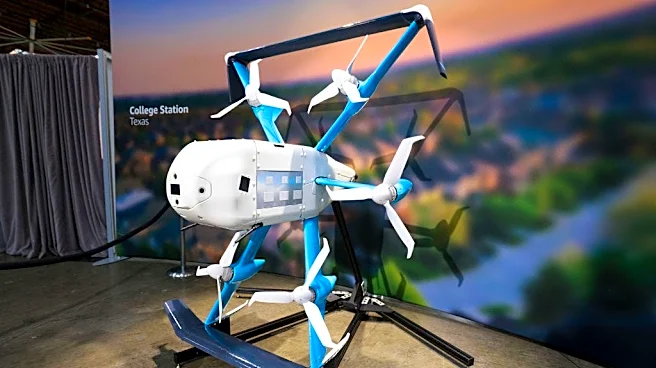
Amazon announced plans to significantly expand its lightweight drone delivery service to nearly 500 U.S. cities by the end of the year. This expansion aims to offer customers delivery of packages up to 5 pounds within 30 minutes. The company's CEO, Andy
Jassy, stated in an April letter to shareholders that Amazon's Prime Air program has developed a scalable design and intends to serve 30 million customers by year-end, with a goal of delivering half a billion packages by the end of the decade. The drones will operate primarily in suburban areas, avoiding skyscrapers and major airports. While hundreds of thousands of packages have already been delivered by Amazon drones this year, this expansion represents a substantial increase in reach, moving beyond the current 11 operational sites across states like Arizona, Florida, and Texas. The service will be free for Amazon Prime members on orders over $50, with smaller orders incurring a $2.99 fee, and non-members paying $4.99.
Why It's Important?
This expansion intensifies the competition in the last-mile delivery sector, particularly with Walmart, which is also investing heavily in drone delivery. The move highlights a strategic shift by major retailers to prioritize speed and convenience to attract and retain customers. While drone delivery currently handles a small fraction of overall package volume, its growth signifies a long-term vision for logistics. The ability to deliver packages in as little as 30 minutes could redefine consumer expectations for online shopping, potentially increasing customer loyalty and market share for companies that successfully implement such services. However, challenges remain, including regulatory hurdles, noise concerns, and the practical limitations of drones, such as their 5-pound weight capacity and the need for clear drop zones. The economic viability of drone delivery, given the human resources required for operation, is also still being evaluated, suggesting that the primary driver is customer satisfaction and competitive advantage rather than immediate cost reduction.
What's Next?
Amazon will proceed with launching its drone delivery service in hundreds of new communities, including major metro areas like Chicago, Atlanta, Cleveland, and Boise. The company will continue to navigate regulatory landscapes in each new community, addressing potential concerns such as noise and safety. Further development of drone technology and operational efficiency will be crucial as Amazon aims to deliver half a billion packages by the end of the decade. The Federal Aviation Administration's proposed rule to allow more drone operators to fly beyond the line of sight of pilots, if finalized, could further accelerate the expansion of drone delivery services across the U.S. Competitors like Walmart, which plans to expand its drone delivery to 270 locations by 2027, will likely respond with their own advancements, leading to continued innovation and competition in the rapid delivery market. The long-term adoption rate by consumers and the ultimate economic model for drone delivery will become clearer as these services become more widespread.
Beyond the Headlines
The widespread adoption of drone delivery could have profound implications for urban planning, infrastructure, and employment. As drone operations scale, there will be increased pressure to establish designated drone corridors and landing zones, potentially altering the visual and auditory landscape of suburban areas. The shift towards automated delivery systems could also impact the traditional delivery workforce, necessitating new job roles in drone operation, maintenance, and logistics management. Furthermore, the convenience of near-instant delivery for a wider range of goods could subtly change consumer behavior, fostering an even greater expectation for immediate gratification and potentially increasing consumption patterns. Ethical considerations around privacy, data security, and the environmental impact of increased drone traffic will also become more prominent as these services integrate further into daily life. The success of Amazon's expansion will serve as a critical case study for the future of autonomous last-mile logistics.