



What's Happening?
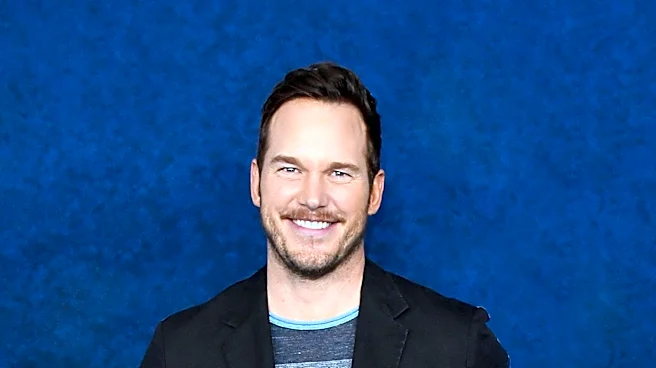
A 2011 tweet by actor Chris Pratt, in which he joked about being a 'crooked cop' if his acting career hadn't materialized, has resurfaced on Reddit, leading to a mixed reception and renewed discussion about his public persona. In the tweet, Pratt described
a hypothetical law enforcement career involving being 'on the payroll,' turning 'a blind eye to corruption,' shooting 'a dude,' and planting 'a gun.' While some users view the tweet as satire from his 'Parks and Recreation' era, where he played the character Andy Dwyer and his alter ego Burt Macklin, others find it problematic given his more conservative public image in recent years. The resurfacing of this tweet has prompted a broader conversation, particularly in light of past controversies surrounding Pratt's religious affiliations and his association with Zoe Church, which has faced criticism for its stance on LGBTQ+ issues. Additionally, some commenters have linked the tweet to a 2021 investigation concerning Pratt's older brother, Solano County Sheriff’s Sergeant Daniel 'Cully' Pratt, who was reported to have posted imagery associated with an anti-government extremist movement.
Why It's Important?
The resurgence of Chris Pratt's decade-old tweet highlights the enduring nature of digital footprints and their potential impact on public figures' careers and reputations. In an era where past statements can be easily unearthed and recontextualized, celebrities face increased scrutiny, and their historical comments can influence public perception regardless of original intent. This situation underscores the challenges public figures encounter in managing their image, especially when their personal beliefs or associations become subjects of public debate. The divided reactions to Pratt's tweet reflect a broader societal tension between interpreting past content within its original context and re-evaluating it through a contemporary lens, particularly concerning sensitive topics like law enforcement ethics and social justice. For the entertainment industry, such incidents can lead to public relations challenges, affecting an actor's marketability and potentially influencing casting decisions or project endorsements. It also emphasizes the growing expectation for public figures to align their public and private personas, or at least to navigate the discrepancies with transparency and accountability.
What's Next?
The ongoing debate surrounding Chris Pratt's resurfaced tweet is likely to continue to generate discussion on social media platforms. While it's unclear if Pratt will issue a new statement or address the renewed criticism, past responses to similar controversies suggest that public figures often choose to either reiterate their previous defenses or remain silent. The incident may prompt further scrutiny of his past statements and associations, potentially influencing public sentiment towards his upcoming projects. For the public, this event serves as another example of how historical digital content can be re-examined and debated, contributing to ongoing conversations about celebrity accountability, freedom of speech, and the evolving standards of public conduct. The entertainment industry may continue to observe how such resurfaced content impacts audience engagement and brand partnerships, potentially leading to more cautious approaches in talent management and public relations strategies.
Beyond the Headlines
This incident delves into the complex interplay between an individual's past expressions, their evolving public image, and the collective memory of the internet. The differing interpretations of Pratt's 2011 tweet—as either harmless satire or a reflection of deeper, problematic views—underscore a significant cultural shift in how public figures are perceived and judged. It raises questions about the permanence of digital content and the extent to which individuals should be held accountable for past remarks, especially when their personal and political views become more prominent. The connection drawn by some commenters between Pratt's joke and his brother's alleged association with an extremist group, regardless of its direct relevance, illustrates how public perception can weave together disparate elements to form a narrative. This phenomenon highlights the challenges of maintaining a consistent and universally accepted public image in the digital age, where context can be easily lost or reinterpreted, and where the line between personal opinion and public responsibility is constantly being redrawn. It also reflects a broader societal conversation about police conduct and accountability, bringing a seemingly unrelated celebrity tweet into a more significant social discourse.