






What's Happening?
Actor Thomas Haden Church recently discussed the significant growth of the filmmaking industry in Fort Worth, Texas, noting that it has surpassed Austin as a film-centric city. He highlighted the influence of figures like Taylor Sheridan, who has brought
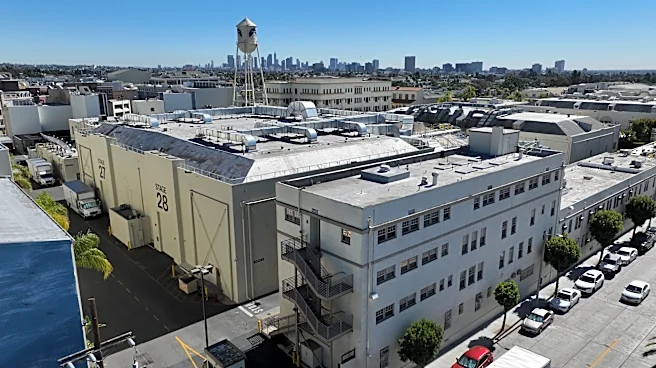
several shows, including 'Lioness' and 'Landman,' to the area. Church also mentioned a 450,000-square-foot production facility opened in North Fort Worth last year, indicating a robust infrastructure for film and television production. In a separate part of the interview, Church, who voices a basset hound named Winstead in the new Netflix film 'A Dog’s Perfect Christmas,' expressed concerns about the increasing use of AI in the voice-over industry. He lamented that AI voicing is becoming prevalent in commercial work, which he described as a 'tragedy' due to its potential impact on human voice actors and their compensation.
Why It's Important?
The shift of filmmaking prominence to Fort Worth, Texas, signifies a notable economic and cultural development for the region. This growth can lead to increased job opportunities in production, hospitality, and related services, boosting the local economy. The presence of major productions and facilities, partly driven by creators like Taylor Sheridan, establishes Fort Worth as a significant hub in the national entertainment landscape. Conversely, Church's concerns about AI in voice acting highlight a growing challenge within the entertainment industry. The displacement of human talent by AI technology raises questions about job security, intellectual property rights, and fair compensation for artists. This trend could impact a wide range of voice actors, from those in commercials to animated features, potentially leading to a reevaluation of industry standards and protections for creative professionals.
What's Next?
The continued expansion of film and television production in Fort Worth suggests further investment and development in the area's infrastructure and talent pool. This could attract more filmmakers and studios, solidifying its position as a major production center. For the entertainment industry at large, the debate surrounding AI in voice acting is likely to intensify. As AI technology advances, there will be increasing pressure for industry bodies, unions, and lawmakers to establish clear guidelines and regulations regarding its use, particularly concerning intellectual property and fair compensation for human artists. Discussions around potential legislative protections or new contractual agreements to safeguard voice actors' livelihoods are anticipated.
Beyond the Headlines
The rise of Fort Worth as a filmmaking hub reflects a broader decentralization trend in the U.S. entertainment industry, moving beyond traditional centers like Los Angeles. This shift can foster regional creative economies and offer diverse storytelling perspectives. The ethical implications of AI in creative fields extend beyond voice acting, touching upon music, writing, and visual arts. The core issue revolves around the definition of authorship, the value of human creativity, and the economic models that support artists in an increasingly automated world. This development prompts a deeper societal conversation about the balance between technological progress and the preservation of human artistic endeavor, potentially leading to new legal frameworks and ethical standards for AI's role in creative industries.