






What's Happening?
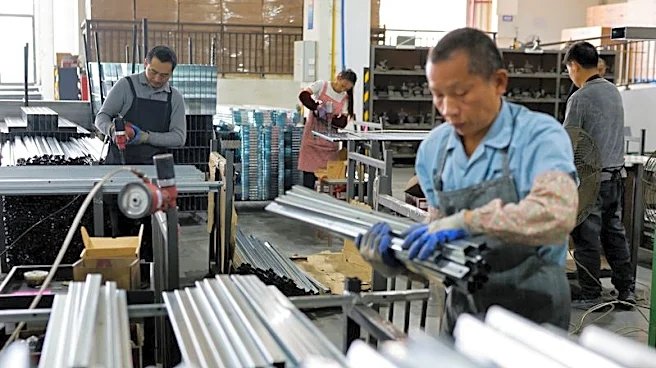
China's economic growth weakened across multiple sectors in October 2026, with industrial output, retail sales, and fixed-asset investment all falling short of expectations. Industrial output grew by 4.8% year-on-year, missing the forecasted 5.3% increase
and slowing from September's figures. Retail sales saw a modest rise of 0.4% from a year ago, significantly lower than the 0.8% consensus forecast by economists and a decrease from September's 1.1% growth. Fixed-asset investment declined by 8.1% in the first ten months of 2026, a worsening trend from the 7.2% drop in the January-September period and worse than the anticipated 7% decrease. These figures indicate that recent moderate stimulus measures, including mortgage subsidies and increased public borrowing quotas, have not yet had a substantial impact on the economy. The National Bureau of Statistics (NBS) acknowledged challenges such as an uncertain global environment and imbalances between supply and demand.
Why It's Important?
The widespread economic slowdown in China carries significant implications for global markets and U.S. businesses. As the world's second-largest economy, China's reduced consumer spending and industrial output can lead to decreased demand for imported goods and services, potentially affecting U.S. export-oriented industries. The reliance on robust technology exports, particularly AI-related products, to buoy China's economy highlights a potential vulnerability; a slowdown in this sector could further exacerbate economic pressures. For U.S. companies operating in or trading with China, this downturn could translate to lower sales, supply chain disruptions, and increased operational risks. The situation also underscores the ongoing challenges in China's property market, which has seen residential prices continue to fall and property investment plunge, impacting consumer confidence and overall economic stability. This economic performance will be closely watched by U.S. policymakers and businesses as they navigate international trade and investment strategies.
What's Next?
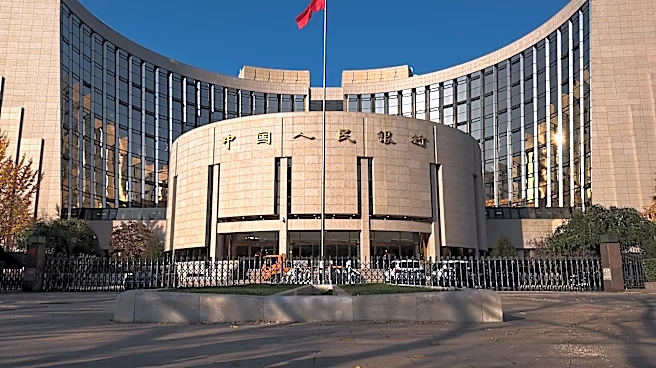
Top officials in China will closely scrutinize the October economic figures ahead of the Central Economic Work Conference, typically held in early December. This conference is expected to provide insights into Beijing's economic priorities for 2027 and the potential scale of any additional support measures. Policymakers may consider leaning more heavily on fiscal measures if the economy continues to lose momentum, although the People's Bank of China has signaled caution regarding interest rate cuts due to weak borrowing demand. While some analysts believe Beijing remains on target to meet its annual GDP growth target of 4.5%-5.0% without significant additional stimulus, the underwhelming October data suggests that more effective policy interventions may be needed to boost domestic consumption and address underlying economic imbalances. The extent of future stimulus will likely depend on the trajectory of export performance and the overall global economic environment.
Beyond the Headlines
The persistent softness in China's domestic demand, despite a seven-day holiday and the Singles Day shopping festival in October, points to deeper issues beyond short-term fluctuations. The National Bureau of Statistics spokesperson noted that while there is huge potential for consumption, people's capacity and willingness to spend need to be enhanced. This suggests that the problem is not merely a lack of available funds but potentially a crisis of consumer confidence, possibly exacerbated by the prolonged property market slump and its impact on household wealth. The official urban surveyed jobless rate unexpectedly slipped, but this metric is considered incomplete as it excludes migrant workers who have returned to rural areas after losing employment, masking the true extent of labor market challenges. This situation highlights a fundamental imbalance in China's growth model, where resilient manufacturing and exports have lessened the pressure on policymakers to address the structural issues hindering domestic consumption and investment.