



What's Happening?
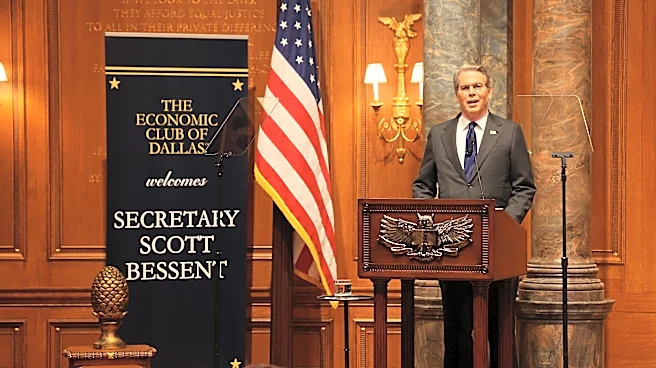
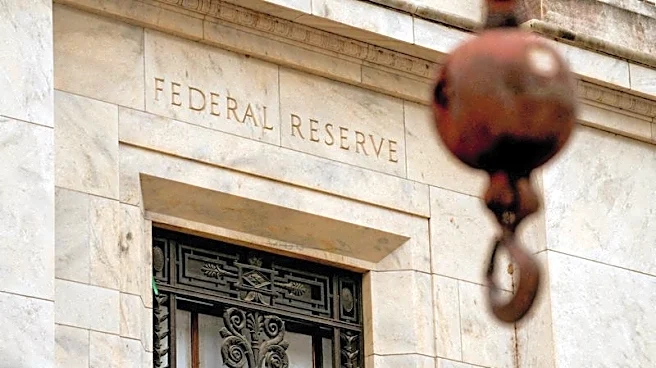
US Treasury Secretary Scott Bessent has publicly urged the Federal Reserve to reconsider a substantial interest rate hike. In an interview with CNBC, Bessent cited an ongoing energy supply shock and a recent decline in crude delivery prices as key reasons
for his stance. He highlighted that a Federal Reserve governor currently advocating for a 50 basis point hike had previously sought a similar rate cut within the past year. Bessent characterized this shift as 'somewhat peripatetic' and encouraged the Fed to adopt a forward-looking approach rather than focusing on past economic indicators. His comments come as the Federal Reserve deliberates its next steps regarding monetary policy in response to current economic conditions.
Why It's Important?
Secretary Bessent's intervention is significant because it signals a potential divergence in economic policy perspectives between the Treasury Department and some factions within the Federal Reserve. The Federal Reserve's interest rate decisions have a profound impact on the U.S. economy, influencing everything from borrowing costs for businesses and consumers to inflation rates and investment. A large interest rate hike, while potentially curbing inflation, could also slow economic growth, particularly in the context of an energy supply shock. Bessent's argument suggests a concern that an aggressive rate hike could exacerbate economic challenges stemming from energy market volatility. His call for the Fed to 'look forward, not backwards' implies a need for monetary policy to adapt to current and anticipated economic realities rather than reacting solely to historical data, which could affect various economic stakeholders, including energy consumers, businesses reliant on affordable credit, and the broader financial markets.
What's Next?
The Federal Reserve will likely continue its deliberations on interest rates, taking into account various economic indicators and expert opinions, including those from the Treasury Department. Bessent's public statement could influence the internal debate among Fed governors, potentially leading to a more cautious approach to rate hikes. Financial markets will closely monitor the Fed's upcoming announcements for any indication of a shift in policy direction. Businesses and consumers will also be watching to see how interest rates evolve, as these decisions will directly impact lending rates for mortgages, car loans, and business investments. The ongoing energy supply situation and crude oil prices will remain critical factors in the Fed's assessment of the economic landscape.
Beyond the Headlines
Secretary Bessent's remarks underscore the complex interplay between fiscal and monetary policy, particularly during periods of economic uncertainty. His emphasis on the energy supply shock highlights the vulnerability of the U.S. economy to global commodity markets and geopolitical events. The debate over whether the Fed should prioritize combating inflation with aggressive rate hikes or support economic stability in the face of external shocks is a recurring theme in economic policy. This situation also brings to light the challenge of maintaining consistent policy stances among economic leaders, as evidenced by the governor who previously sought a rate cut now advocating for a hike. The outcome of this debate could set a precedent for how the Federal Reserve responds to future supply-side shocks and external economic pressures, potentially influencing long-term economic stability and growth strategies.