





What's Happening?
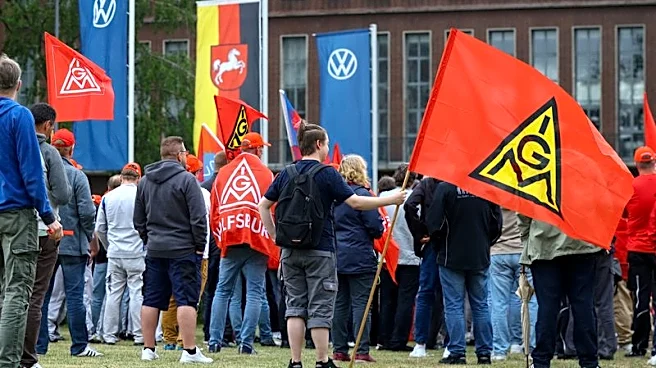
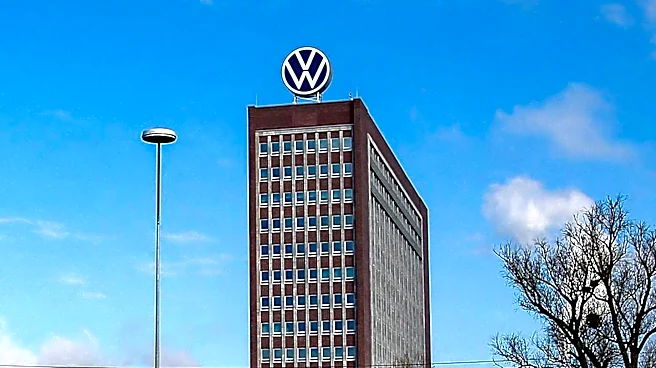
Volkswagen AG is initiating negotiations with the German trade union IG Metall, proposing a two-year pay freeze for 2027 and 2028. The automaker also seeks to eliminate two collectively agreed payments and introduce flexibility in weekly working hours,
allowing them to rise or fall with plant utilization. This move comes as Volkswagen faces significant financial challenges, including increased tariffs, a shrinking market in China, and heightened competition in Europe. The company's operating result for 2025 was €8.9 billion (US$9.8 billion), less than half of its 2024 figure. These proposals are part of Volkswagen's 'Future Plan 2030,' which includes 12 initiatives aimed at reducing development, material, production, warranty, and sales costs. Kerstin Scholz and Frank Ischner will lead the talks as joint Chief Negotiators for Volkswagen.
Why It's Important?
This negotiation is critical for Volkswagen as it attempts to navigate a challenging global automotive landscape. A successful pay freeze and adjustments to working hours could significantly reduce labor costs, which are a key component of the company's 'Future Plan 2030.' The outcome will directly impact Volkswagen's financial stability and its ability to compete effectively against rivals, particularly in the electric vehicle market. For U.S. consumers and the automotive industry, Volkswagen's financial health can influence vehicle availability, pricing, and investment in new technologies. If Volkswagen struggles, it could lead to reduced innovation or a shift in its global production strategies, potentially affecting its U.S. market offerings and competitiveness against domestic and other international brands.
What's Next?
The negotiations between Volkswagen and IG Metall are set to begin on November 24, 2026, in Emden. Volkswagen is pushing for a swift agreement to address the high cost pressure it currently faces. The discussions will determine whether the union accepts the proposed pay freeze and changes to working conditions. The results of these talks could set a precedent for labor negotiations across the German automotive industry, as other manufacturers also face similar economic headwinds. The company's ability to secure these concessions will be a key indicator of its future cost-saving potential and its strategic direction in a rapidly evolving automotive market.
Beyond the Headlines
The situation at Volkswagen highlights a broader trend within the global automotive industry, where traditional manufacturers are grappling with the immense costs of transitioning to electric vehicles while simultaneously managing existing combustion engine operations. The pressure from tariffs and a competitive Chinese market underscores the interconnectedness of global trade and its direct impact on corporate profitability and labor relations. This scenario also raises questions about the long-term sustainability of current labor agreements in high-cost manufacturing regions like Germany, as companies seek greater flexibility to remain competitive. The outcome could influence future labor models, potentially leading to more performance-based or flexible compensation structures across the industry.