



What's Happening?
Mary Barra, Chair and Chief Executive Officer of General Motors, has reiterated the company's commitment to electric vehicles (EVs) as its long-term objective, despite a recent slowdown in EV adoption in the United States. In an interview with Fortune,
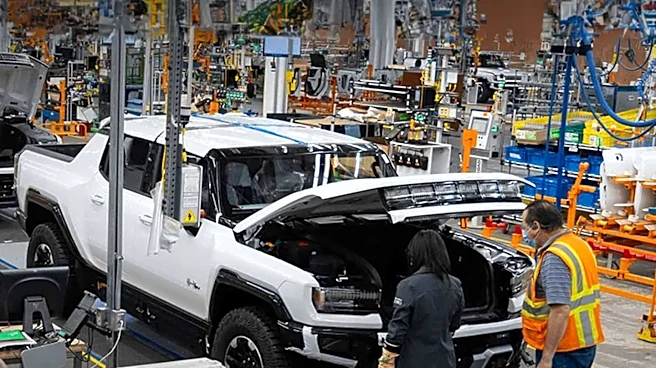
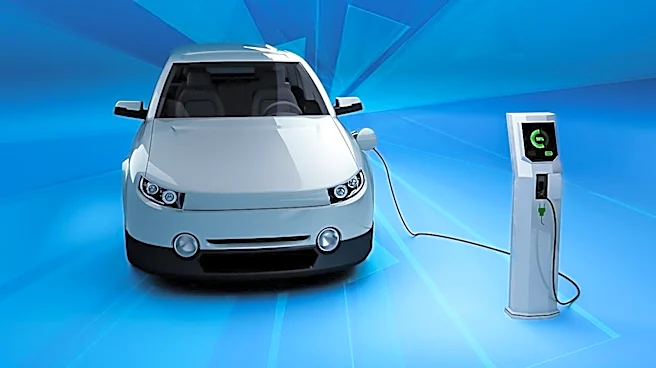
Barra projected that EVs could account for 40% to 50% of GM's sales by 2030, with the remaining sales comprising gasoline and hybrid models. This strategy indicates a gradual transition rather than an abrupt shift. Barra acknowledged that the full transformation to electric vehicles might take decades. She highlighted that regulatory environments in regions like China and Europe have fostered faster EV advancement due to combined emissions rules and infrastructure development, unlike the less uniform policies in the U.S. A significant practical obstacle in the U.S. remains the charging infrastructure, with lengthy licensing processes delaying the establishment of new charging stations, despite federal funding efforts. GM's product planning continues to integrate both EVs and hybrids, and the company is sustaining investments in batteries, software, and charging infrastructure, which are deemed crucial for its long-term strategy.
Why It's Important?
GM's steadfast commitment to its electric vehicle strategy, as articulated by Mary Barra, holds significant implications for the U.S. automotive industry and broader economic landscape. This long-term vision signals continued investment in EV technology, manufacturing, and infrastructure within the U.S., potentially creating jobs and fostering innovation in related sectors. However, the acknowledged challenges, particularly regarding charging infrastructure and regulatory inconsistencies, highlight potential hurdles for widespread EV adoption. The slower pace of electrification in the U.S. compared to other global markets could impact the competitiveness of American automakers and the nation's progress toward climate goals. Consumers stand to gain from a wider array of EV options, but the current infrastructure limitations could deter some from making the switch. For GM, balancing high-profit gasoline-powered trucks and SUVs with long-term EV investments is crucial for financing future projects, indicating a strategic approach to manage current market demands while preparing for a future dominated by electric mobility. The financial market's positive reception to Barra's statements suggests investor confidence in GM's strategic direction, despite short-term market volatility.
What's Next?
General Motors is expected to continue its dual strategy of developing both electric and hybrid vehicles, with ongoing investments in battery technology, software, and charging infrastructure. The company will likely maintain its focus on expanding the EV charging network, potentially advocating for streamlined licensing processes and continued federal support to accelerate infrastructure development in the U.S. The pace of EV adoption in the U.S. will largely depend on improvements in charging accessibility and evolving regulatory frameworks. GM's long-term goal of 40-50% EV sales by 2030 suggests a sustained, gradual transition, allowing for tactical adjustments based on market demand and technological advancements. The company's continued reliance on profitable gasoline and hybrid models will likely fund these future EV initiatives. Stakeholders, including consumers, policymakers, and investors, will be closely watching GM's execution of this strategy, particularly how it navigates the balance between current market realities and its ambitious electrification targets.
Beyond the Headlines
Mary Barra's leadership at General Motors, particularly her unwavering commitment to electrification, reflects a broader shift in corporate responsibility and strategic foresight within the automotive industry. Her emphasis on long-term vision, even amidst short-term market fluctuations and regulatory challenges, underscores a recognition that the future of transportation is fundamentally electric. This approach transcends mere product development, touching upon ethical considerations of environmental sustainability and the societal impact of technological transitions. The challenges in U.S. charging infrastructure and regulatory uniformity highlight a critical need for cohesive public-private partnerships to facilitate this transition effectively. Furthermore, Barra's leadership as the first woman to head a major global automobile manufacturer sets a significant precedent, influencing corporate culture and diversity within traditionally male-dominated industries. Her ability to balance innovation with the practicalities of a complex global business, while also addressing safety concerns and workforce impacts, illustrates the multifaceted nature of modern corporate leadership.