
What's Happening?
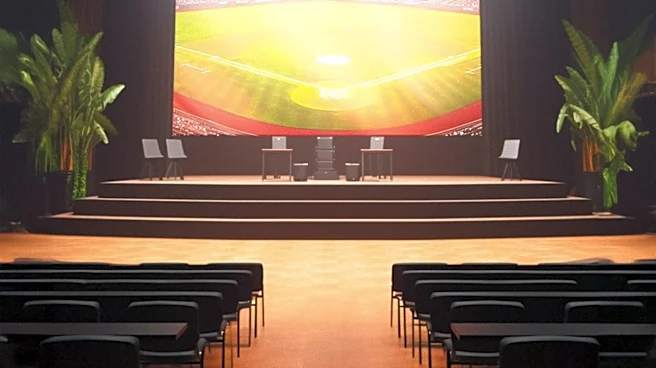
Nike recently held its first Investor’s Day in nearly a decade, where it showcased a range of new products emphasizing innovation and unconventional design. Among the highlights were the expansion of the Nike Mind
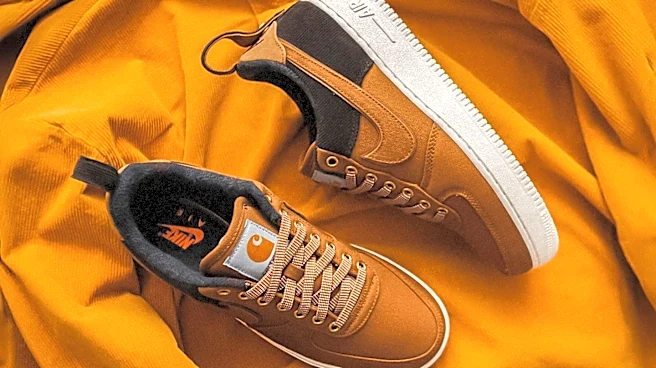
line, featuring shoes with ergonomic nodes designed to activate whole-body senses, and the inflatable Therma-Fit A.I.R. jacket, which boasts a bubble-wrap-like texture. These introductions signal Nike's strategic shift towards more adventurous and technically advanced offerings, moving beyond traditional sneaker designs. The company's presentation underscored its belief that its strength lies in pushing boundaries, drawing parallels to past successes like the Flyknit Runner in 2012 and the Air Vapormax in 2017. The re-emergence of the Air Rift, a 1995 barefoot runner, as a popular item, further supports Nike's renewed focus on unique and 'weird' products.
Why It's Important?
This strategic pivot by Nike is significant for the athletic footwear and apparel industry, particularly in the U.S. market. By prioritizing 'weird' and innovative designs, Nike aims to reclaim its position at the forefront of sport-style culture, potentially influencing broader fashion trends and consumer preferences. The introduction of products like the Mind line and Therma-Fit A.I.R. jacket could stimulate demand for performance-enhancing and visually distinctive athletic wear. Competitors may be compelled to accelerate their own research and development efforts to keep pace with Nike's renewed focus on technical breakthroughs and stylistic adventurousness. For consumers, this could mean a wider array of unique and technologically advanced options, while for retailers, it presents opportunities to capitalize on new product cycles and evolving fashion sensibilities. The success of this strategy could also impact Nike's market share and financial performance, as it seeks to convert intrigue into sustained sales.
What's Next?
Following the Investor's Day presentation, Nike is expected to continue rolling out these innovative products, with potential for further expansions within the Mind line and other 'weird' concepts. The company will likely monitor consumer reception and sales performance closely to gauge the effectiveness of its new strategy. Future collaborations, similar to the SKIMS partnership for the Air Rift, could be explored to amplify the reach and appeal of these unique offerings. The emphasis on innovation suggests ongoing investment in research and development, which could lead to more advanced materials and design methodologies. The broader market will be watching to see if this 'weirdness' translates into sustained commercial success and if it prompts other major brands to adopt similar unconventional approaches in their product development.
Beyond the Headlines
Nike's embrace of 'weirdness' reflects a deeper trend in consumer culture where uniqueness and individuality are increasingly valued over conventional aesthetics. This move could challenge traditional notions of what constitutes 'athletic wear' and blur the lines between performance, fashion, and art. Ethically, the focus on 'whole-body senses' and advanced ergonomics raises questions about the future integration of technology and human physiology in product design, potentially leading to more personalized and immersive user experiences. Culturally, the revival of niche products like the Air Rift suggests a cyclical nature of trends, where once-polarizing designs can find new relevance. This strategy also highlights the importance of a brand's heritage and its ability to reinterpret past successes for contemporary audiences, demonstrating that innovation can also involve looking back to move forward.