





What's Happening?
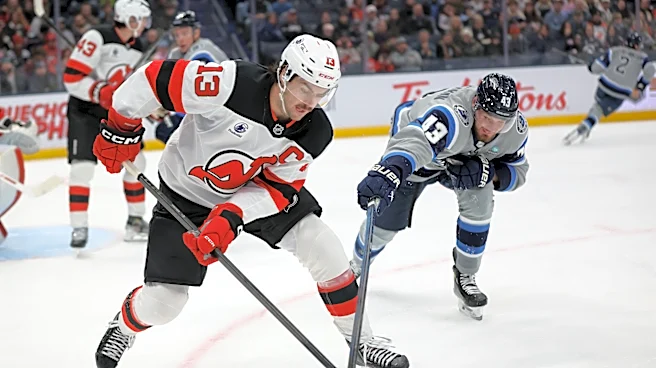
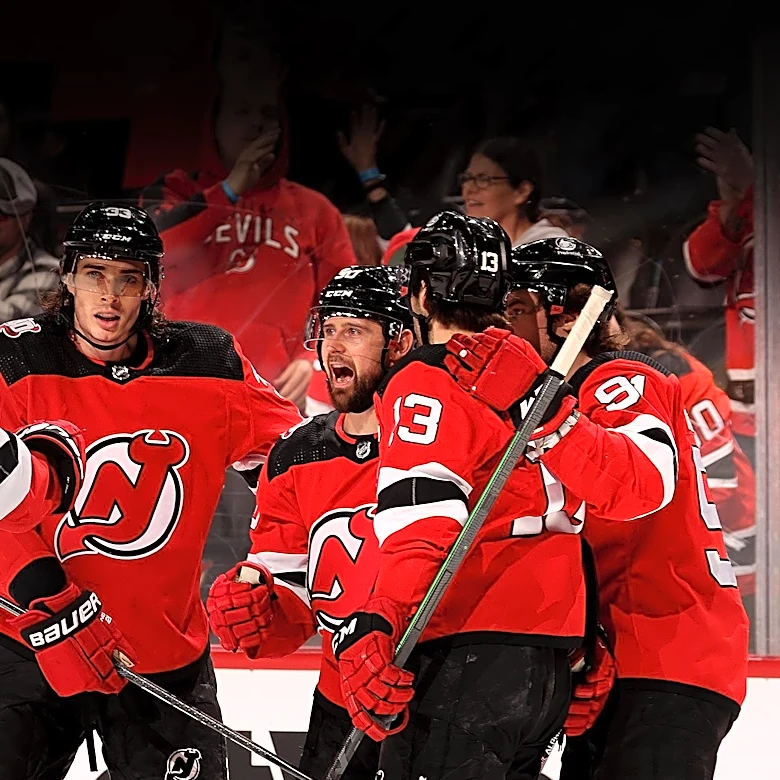
Morgan Frost, a center for the Flames, recorded an assist and two penalty minutes (PIM) in Friday's 5-3 loss to the Devils. This game marked Frost's return to the lineup after a one-game absence due to an upper-body injury. Despite previously playing
in a top-six role earlier in the season, Frost filled a bottom-six position in this game. Across 26 appearances this season, he has accumulated five goals, 10 assists, 37 shots on net, and a minus-9 rating.
Why It's Important?
Morgan Frost's return to the Flames' lineup, even in a reduced role, is significant for the team's depth and offensive capabilities. His ability to contribute an assist immediately after recovering from an injury demonstrates his potential impact. For fantasy hockey players and analysts, his performance and role within the team are crucial indicators. A player's return from injury, especially one who has previously held a top-six position, can influence team strategies, line combinations, and overall offensive output. His season statistics, including goals, assists, shots on net, and plus/minus rating, provide a comprehensive view of his contribution and form a basis for future expectations and evaluations.
What's Next?
Following his return, the focus will be on Morgan Frost's continued recovery and his ability to regain a more prominent role within the Flames' lineup. His performance in upcoming games will determine if he can move back into a top-six forward position. The coaching staff will monitor his health and on-ice effectiveness closely. For fantasy hockey managers, observing his ice time, linemates, and offensive production will be key to assessing his value. The team will likely continue to manage his workload carefully to prevent re-injury while maximizing his contributions to their season goals.
Beyond the Headlines
The narrative of a player returning from injury and immediately contributing highlights the resilience and dedication often seen in professional sports. For athletes like Morgan Frost, overcoming physical setbacks is a testament to their commitment. His fluctuating role from top-six to bottom-six also illustrates the dynamic nature of professional sports rosters, where performance, health, and team strategy constantly influence a player's position. This situation can also impact team morale and chemistry, as players adjust to new roles and responsibilities. The broader implications touch upon player development, injury management protocols, and the competitive pressures faced by athletes to maintain peak performance.