






What's Happening?
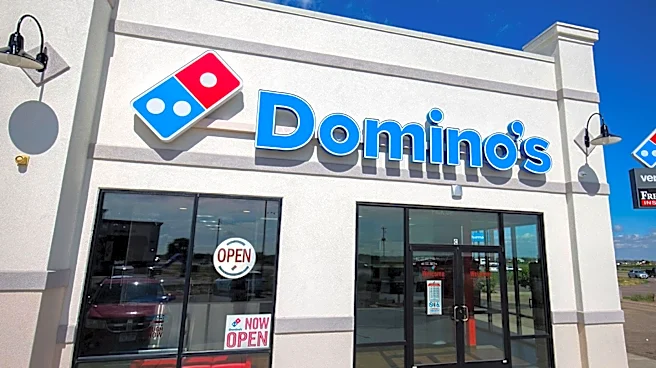
Performance Pizza, a franchisee operating Domino's Pizza locations in southern Florida, has filed for Chapter 11 bankruptcy protection in the Florida Southern Bankruptcy Court on November 23. The company reported less than $50,000 in assets and between
$1 million and $10 million in liabilities. Performance Pizza is listed as having fewer than 50 creditors, with significant debts owed to loan providers AFK ($818,903.63) and the Amsterdam Group ($291,668.91). Smaller debts are also owed to companies like AT&T and The Coca-Cola Company. James Portuhondo is registered as the president of Performance Pizza, and Adam I. Skolnik is representing the company in the insolvency proceedings. The filing indicates that the debtor's aggregate noncontingent liquidated debts are not more than $7,500,000, allowing it to proceed under Subchapter V of Chapter 11. The company employs between 40 and 60 workers.
Why It's Important?
This bankruptcy filing by a Domino's franchisee highlights the ongoing financial pressures faced by businesses in the U.S. food service sector, particularly within the pizza industry. The broader context reveals that while the global pizza market is projected to grow, many mainstream chains, including Papa John's and Pizza Hut, have announced plans to close underperforming stores due to rising food costs and a shift in consumer preferences towards artisanal options. This trend suggests a challenging environment for traditional pizza franchises, where even established brands like Domino's are not immune to the economic headwinds affecting their operators. The bankruptcy of Performance Pizza could signal a need for franchisees to re-evaluate their operational strategies and financial structures to adapt to evolving market conditions and cost pressures.
What's Next?
It is currently unclear how Performance Pizza plans to restructure its operations or what the future holds for the specific Domino's Pizza locations it operated. The Chapter 11 filing allows the company to reorganize its finances while continuing its business operations, but the outcome will depend on its ability to negotiate with creditors and develop a viable restructuring plan. The broader Domino's Pizza brand, despite its overall U.S. footprint increasing from 2025 to 2026, has also experienced weaker demand in certain markets. This situation suggests that the parent company may need to provide additional support or adjust its franchise model to help operators navigate the current economic climate and prevent further bankruptcies among its franchisees.
Beyond the Headlines
The bankruptcy of Performance Pizza underscores a significant shift in the U.S. food industry, where rising operational costs and changing consumer tastes are forcing even large, established chains to adapt. This development could lead to a broader consolidation within the fast-food sector, with smaller, less resilient franchisees struggling to compete. It also raises questions about the long-term viability of traditional franchise models in an environment where consumers increasingly seek out diverse and often more premium dining experiences. The incident may prompt a re-evaluation of franchise agreements and support systems to ensure the sustainability of individual operators, potentially influencing future business strategies across the entire quick-service restaurant landscape.