
What's Happening?
Mohamed El-Erian, the Chief Economic Advisor at Allianz and former CEO of PIMCO, has expressed a cautious yet opportunistic view on the current technology stock market. Speaking on CNBC on November 25,
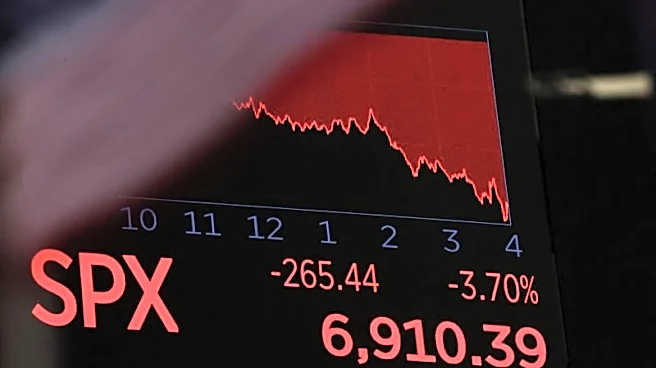
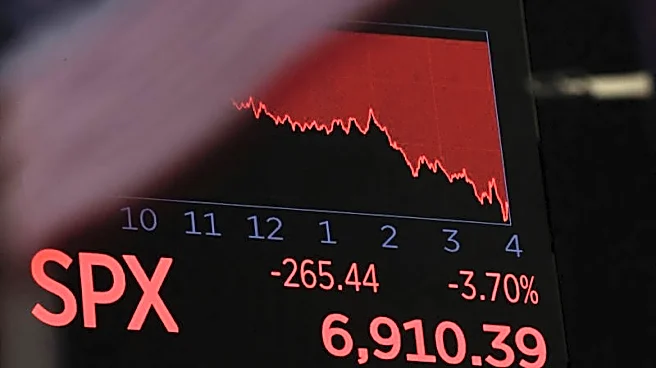
El-Erian noted that while the sell-off in technology stocks presents a long-term opportunity, he anticipates further forced sales in the short term. He distinguishes between the intrinsic value of companies and the overall market condition, with the latter being a greater concern. El-Erian suggests a strategy of gradual re-entry into the market, acknowledging that good companies are currently cheaper than a month ago. He specifically highlighted Nvidia, stating it is 'too big to wobble,' implying its significance to the market and economic expectations, particularly concerning AI development. His approach emphasizes patience and a step-by-step investment strategy, preparing for potential continued fluctuations.
Why It's Important?
El-Erian's insights are significant for U.S. investors and the broader financial markets due to his influential position and track record as a leading economist. His warning about forced sales by credit-financed investors suggests potential instability that could impact various market segments beyond technology stocks, including corporate bonds and the real economy. This perspective could influence investment strategies, leading to a more conservative approach among institutional and individual investors. If his predictions of further short-term volatility materialize, it could create both risks for those heavily leveraged and opportunities for patient, well-capitalized investors looking to acquire assets at lower valuations. The emphasis on Nvidia's systemic importance also underscores the critical role of key technology players in the overall economic landscape, where their performance can ripple through market sentiment and investment in emerging technologies like AI.
What's Next?
Investors and market participants will likely monitor El-Erian's advice closely, particularly as the U.S. Federal Reserve's interest rate decision on December 9 approaches. El-Erian anticipates a quarter-point rate hike and a cautious outlook from the Fed, which could further influence market dynamics. His recommendation for gradual investment suggests that market recovery might not be swift, and investors should be prepared for continued volatility. The potential for forced sales by leveraged investors could lead to further price corrections, creating entry points for those with a long-term investment horizon. The market's reaction to the Fed's decision and subsequent economic data will be crucial in determining whether El-Erian's cautious optimism or his concerns about short-term instability will prevail.
Beyond the Headlines
El-Erian's commentary extends beyond immediate market movements, touching upon the structural vulnerabilities within the financial system, particularly concerning credit-financed investments. His concern about the potential for pressure to transfer from equities to corporate bonds and the real economy highlights a systemic risk that could have broader economic implications. This perspective encourages a deeper examination of market leverage and its potential to amplify downturns. Furthermore, his observation about Nvidia being 'too big to wobble' points to the increasing concentration of market value in a few dominant technology firms. This concentration raises questions about market resilience and the potential for single-company events to trigger wider market instability, underscoring the interconnectedness of the modern financial ecosystem and the critical role of technological innovation in shaping economic futures.