



What's Happening?
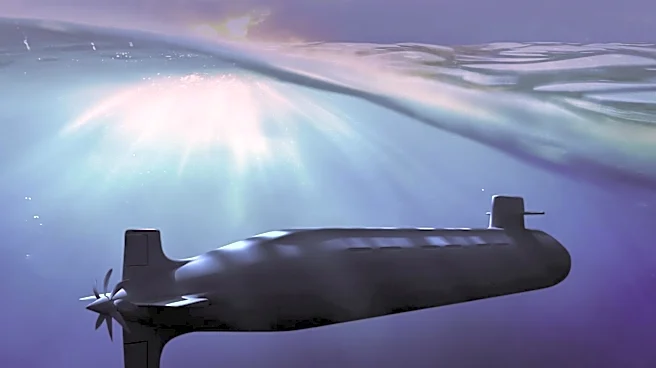
BAE Systems has been awarded a $138 million contract by the US Navy. This contract is for the continued production of propulsor assemblies for the Virginia-class submarine program. The company has consistently met the Navy's production target of two Virginia-class propulsor sets
annually and has supplied major propulsor assemblies for every submarine in this class to date. The contract encompasses the manufacturing of propulsor assemblies, engineering services, provision of replacement parts, and associated support services. The ordering period for these services and products extends through September 2032. Jason Casciotti, Vice President of BAE Systems Weapon Systems, emphasized the company's role in delivering critical components for US undersea dominance and its commitment to strengthening the submarine force through its scaled facilities and skilled workforce. BAE Systems' proactive investments in advanced manufacturing and engineering capabilities across its facilities in Louisville, Kentucky; Jacksonville, Florida; and Minneapolis, Minnesota, are crucial for meeting the Navy's 1+2 submarine manufacturing cadence.
Why It's Important?
This contract is significant for several reasons, primarily reinforcing the US Navy's strategic capabilities and BAE Systems' role as a key defense contractor. The Virginia-class submarines are vital assets for US undersea dominance, and the continuous supply of propulsor assemblies ensures the fleet's operational readiness and expansion. For BAE Systems, this substantial contract solidifies its position in the defense sector, providing long-term revenue and stability. It also highlights the importance of domestic manufacturing and engineering capabilities in supporting national security objectives. The contract's duration, extending to 2032, indicates a sustained demand for BAE Systems' specialized products and services, benefiting its workforce and facilities in Kentucky, Florida, and Minnesota. This investment in critical defense infrastructure also supports the broader U.S. industrial base, fostering job creation and technological advancement within the defense sector.
What's Next?
BAE Systems will continue to manufacture and deliver propulsor assemblies, engineering services, and support for the Virginia-class submarine program under the terms of this contract, which extends through September 2032. The company is expected to maintain its production goal of two propulsor sets per year, leveraging its facilities in Louisville, Kentucky; Jacksonville, Florida; and Minneapolis, Minnesota. This long-term commitment ensures the ongoing development and maintenance of the US Navy's submarine fleet. The sustained partnership between BAE Systems and the US Navy will likely involve continuous innovation in propulsor technology and manufacturing processes to meet evolving defense requirements. Furthermore, the contract's longevity suggests a stable outlook for BAE Systems' defense segment, potentially leading to further investments in its manufacturing capabilities and workforce development to support future naval programs.
Beyond the Headlines
The consistent awarding of contracts like this to BAE Systems underscores a broader strategic imperative within the U.S. defense industry: maintaining technological superiority and a robust domestic supply chain for critical military assets. The Virginia-class submarine program represents a significant investment in undersea warfare capabilities, reflecting geopolitical considerations and the need for advanced naval power projection. This contract also highlights the intricate relationship between government defense spending and the private sector, where companies like BAE Systems play a pivotal role in national security. The long-term nature of such agreements fosters specialized expertise and infrastructure, creating a defense ecosystem that is difficult to replicate. It also raises questions about the balance between proprietary technology and national security interests, as well as the economic impact of defense contracts on local communities and the broader U.S. economy.