






What's Happening?
Ramaco Resources, Inc. (NASDAQ: METC, METCB) announced its financial results for the third quarter of 2026, reporting a net loss of $(18.2) million and Class A diluted EPS of $(0.32). The company's Adjusted EBITDA for the quarter was $3.0 million, and it ended
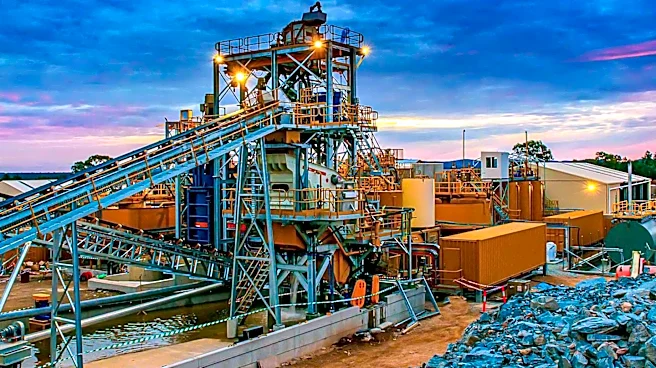
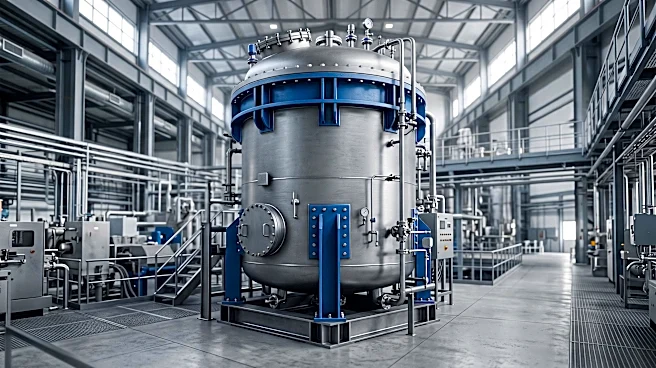
the period with $375 million in liquidity, marking a 38% year-over-year increase. In its metallurgical coal segment, Ramaco has secured 1.7 million tons of domestic business for 2027 at an average fixed price of $139 per ton, alongside 1.1 million tons of export commitments. The company is also advancing its rare earth and critical minerals project at the Brook Mine in Wyoming. Recent carbochlorination tests have shown high recovery rates for various critical minerals, including 97% for scandium, gallium, and germanium combined, 92% for NdPr, 96% for yttrium, and 97% for dysprosium and terbium. The construction of a pilot plant for critical minerals in Wyoming is underway, with the building structure expected to be completed in early 2027. A pre-feasibility study (PFS) for the project is anticipated to begin in Q1 2027 and conclude in the second half of 2027.
Why It's Important?
Ramaco Resources' dual focus on metallurgical coal and critical minerals positions it uniquely within the U.S. industrial landscape. The continued development of its rare earth project is significant for national efforts to establish a domestic supply chain for critical minerals, reducing reliance on foreign sources, particularly China. The high recovery rates demonstrated in testing indicate the potential viability of Ramaco's processing methods, which could contribute to the economic feasibility of extracting these essential materials from domestic sources. The company's strong liquidity provides a stable financial foundation to pursue these capital-intensive projects. For the U.S. economy and national security, securing a reliable domestic supply of rare earths and other critical minerals is crucial for industries ranging from defense and advanced technology to renewable energy. The progress at the Brook Mine could help mitigate supply chain vulnerabilities and foster greater economic independence in strategic sectors.
What's Next?
Ramaco Resources plans to commence a pre-feasibility study (PFS) for its critical minerals project in Q1 2027, with completion expected in the latter half of the year. The pilot plant building structure in Wyoming is slated for completion in early 2027, followed by the installation and testing of interior processing modules, with the pilot plant expected to be fully operational in the second half of 2027. The company is also actively engaged in discussions for potential domestic and international offtake agreements and third-party project financing for the critical mineral refinery. In its metallurgical coal business, Ramaco anticipates stronger margin expansion in Q4 2026 and full-year 2027 due to improving market conditions and increased low-vol production. The new rail loadout at the Maben Complex is expected to be operational by January 2027, which should reduce trucking costs. Investors will be watching for further updates on the PFS results, pilot plant commissioning, and any definitive agreements for critical mineral sales or financing.
Beyond the Headlines
The advancement of Ramaco Resources' critical minerals project highlights a broader strategic shift in the U.S. towards resource independence and the circular economy. By exploring the extraction of rare earths from coal and e-waste, Ramaco is addressing both the supply deficit of these materials and the environmental challenge of waste management. The company's efforts to test third-party e-waste samples for metallurgical evaluation indicate a potential for integrating urban mining into its feedstock strategy, which could create a more sustainable and diversified supply chain. This approach could also spur innovation in recycling technologies and create new economic opportunities in waste processing. The long-term implications include the potential for the U.S. to become a leader in sustainable critical mineral production, fostering a more resilient industrial base and reducing the environmental footprint associated with traditional mining practices. This initiative could also set a precedent for other resource companies to explore similar integrated approaches to mineral extraction and recycling.