


What's Happening?
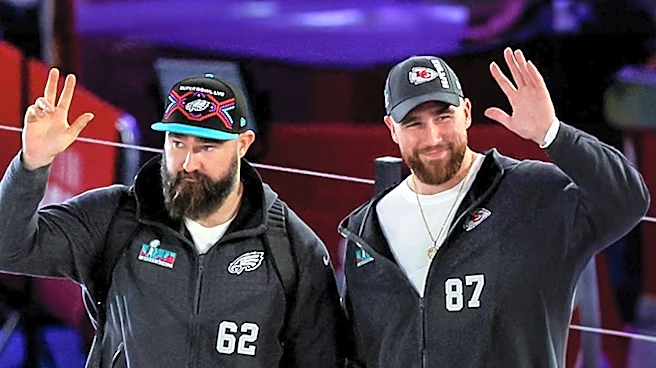
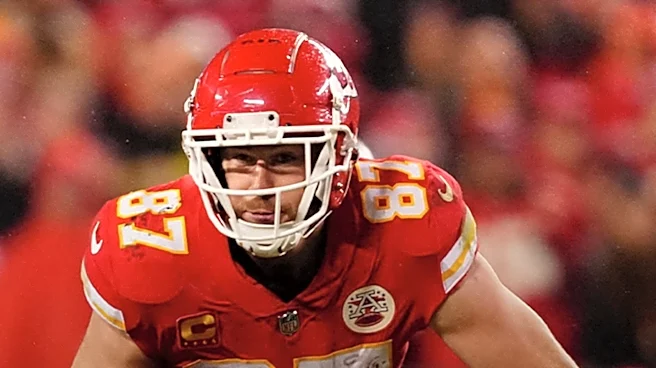
During a recent episode of their 'New Heights' podcast, brothers Jason and Travis Kelce discussed various football-related topics and personal anecdotes. Jason Kelce reacted to throwback photos from his University of Cincinnati days, expressing his dislike
for his clean-shaven appearance without his signature beard, which he considers a defining feature. He also commented on his past eyebrow grooming habits. The conversation also shifted to a viral video of Travis Kelce from a Chiefs training camp, where he was seen running a slow route. This footage garnered significant online criticism. Jason defended his brother, arguing that practice sessions should remain private spaces for players to experiment and refine their skills without public scrutiny or the pressure of every moment being analyzed on social media. Travis explained that his slow route was intentional, designed to bait the defender.
Why It's Important?
This discussion highlights the evolving relationship between professional athletes, media, and public perception in the digital age. Jason Kelce's comments about the privacy of practice underscore a growing concern among athletes regarding the constant surveillance and immediate public judgment fueled by social media. The viral nature of Travis Kelce's practice clip demonstrates how even routine training activities can become subjects of widespread debate and criticism, potentially impacting player morale and team dynamics. The brothers' candid conversation also offers fans a glimpse into the personal side of professional athletes, humanizing figures often seen only through their on-field performances. It also touches on the personal identity of athletes, as Jason's attachment to his beard illustrates how physical appearance can become intertwined with public persona and self-perception.
What's Next?
The ongoing debate about the public's access to and interpretation of athletes' private moments, particularly during practice, is likely to continue. Teams and leagues may face increasing pressure to manage media access to training camps and control the dissemination of practice footage to protect players from undue scrutiny. Athletes, in turn, may become more guarded during practice sessions, potentially limiting their willingness to experiment or take risks if they fear public backlash. The 'New Heights' podcast, known for its candid discussions, will likely continue to be a platform where the Kelce brothers address such contemporary issues in sports, influencing fan perception and potentially encouraging broader conversations within the sports community about media ethics and player privacy.
Beyond the Headlines
The incident raises broader questions about the boundaries of privacy for public figures, especially in an era where nearly every moment can be captured and shared. For athletes, the line between their professional and personal lives is increasingly blurred, with social media acting as a constant, unfiltered lens. This situation also touches upon the psychological impact of constant public judgment on athletes, who are expected to perform at peak levels while under intense scrutiny. The Kelce brothers' discussion implicitly calls for a re-evaluation of what constitutes 'news' from training camps and whether every minor detail needs to be amplified. It also highlights the cultural shift where fan engagement, while valuable, can sometimes cross into intrusive territory, impacting the very individuals it aims to celebrate.