


What's Happening?
Court documents unredacted this week reveal that executives at major AI companies were aware that their chatbots posed an "existential threat" to journalists and that the training of their large language models (LLMs) involved the "largest theft of labor
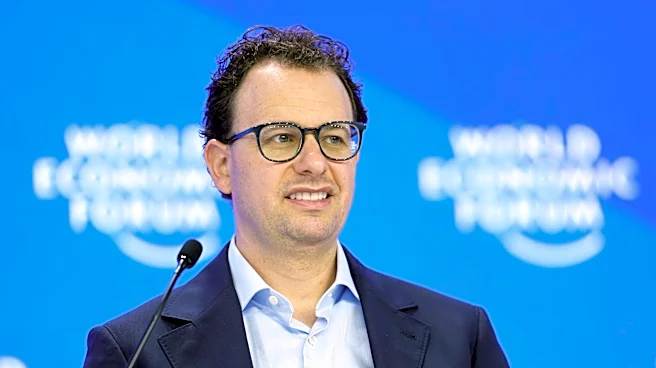
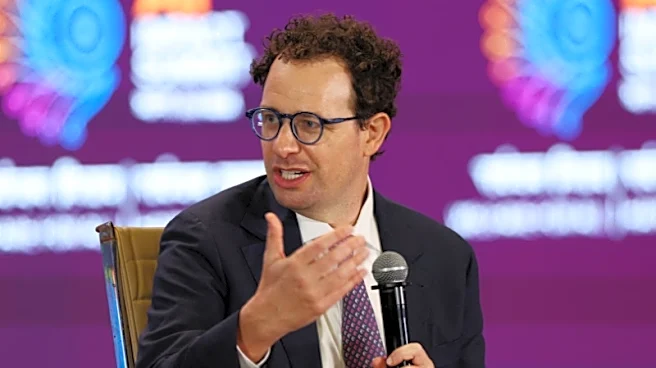
in human history." These comments were cited by news publishers in a court filing as part of ongoing copyright infringement cases against OpenAI and its partner Microsoft, including lawsuits from The New York Times and Ziff Davis. Microsoft's director of applied science, Brent Hecht, reportedly made the "astonishing theft" comment, while an OpenAI executive acknowledged the "existential threat" to publishers. The filing also details instances where AI developers allegedly took steps to bypass paywalls, such as an OpenAI employee sharing a "hack to get around nytimes paywall" with OpenAI President Greg Brockman, who responded with "ah nice."
Why It's Important?
This development is critically important for the U.S. media industry, intellectual property law, and the future of content creation. The allegations of widespread copyright infringement and the acknowledgment of an "existential threat" highlight a fundamental conflict between AI development and the sustainability of journalism. If AI companies are found liable for using copyrighted material without compensation, it could lead to significant financial repercussions for the tech giants and potentially establish new legal precedents for AI training data. For news publishers, a favorable ruling could provide much-needed revenue and protection for their content, ensuring the continued viability of investigative journalism and quality reporting. Conversely, if AI companies prevail, it could further erode the economic model of traditional media, leading to job losses and a decline in original content. This legal battle will shape how intellectual property is valued and protected in the age of AI, impacting creators across various industries.
What's Next?
The ongoing copyright infringement cases against OpenAI and Microsoft are expected to proceed with intense legal scrutiny. The court's decisions will likely set crucial precedents for how AI models can be trained and how copyrighted material is protected in the digital age. This could lead to new licensing models and agreements between AI developers and content creators, potentially establishing a framework for fair compensation. Regulatory bodies and lawmakers may also become more involved, potentially introducing new legislation to address the unique challenges posed by AI's use of copyrighted content. The outcome of these cases will influence the competitive landscape of the AI industry, as companies may need to adjust their training practices and business models. Furthermore, the public discourse around AI ethics and intellectual property rights will intensify, prompting a broader societal discussion about the balance between technological innovation and the protection of creative works.
Beyond the Headlines
The deeper implications of this legal battle extend to the very definition of creativity, authorship, and the value of human labor in an AI-driven world. If AI can generate content by essentially 'learning' from vast amounts of human-created work without direct compensation, it challenges the traditional economic incentives for human creators. This could lead to a devaluation of creative professions and a shift in the cultural landscape, where AI-generated content becomes ubiquitous, potentially diminishing the demand for original human artistry and journalism. Ethically, the alleged bypassing of paywalls and the 'theft of labor' raise questions about corporate responsibility and the moral obligations of powerful tech companies. The long-term societal impact could be a significant transformation of the information ecosystem, where the sources of news and knowledge are increasingly opaque, and the distinction between human and AI-generated content becomes blurred, potentially affecting public trust and the democratic process.