



What's Happening?
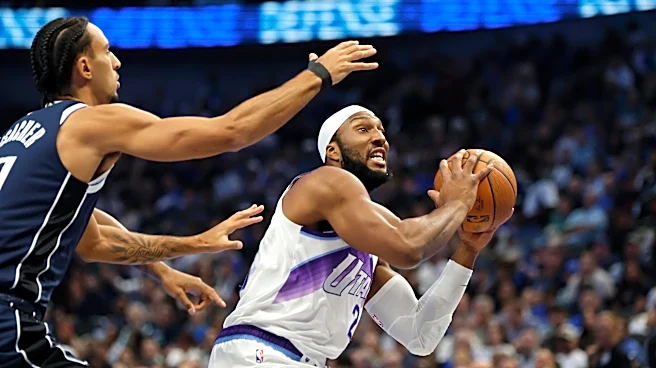
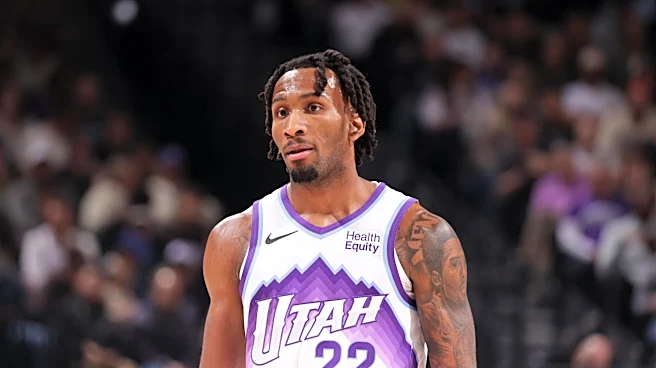
NBA player Josh Okogie, currently in his ninth season and first with the Utah Jazz, has shed light on the security vulnerabilities professional athletes face due to their public schedules. Okogie, known for his defensive prowess, highlighted that the public availability
of NBA game schedules means potential criminals can easily track when players are away from home. He explained that this knowledge makes athletes' residences targets for burglaries, with perpetrators potentially monitoring their movements via television. Okogie emphasized the necessity of a support system, such as friends living with him, to ensure the safety of his home and pets while he is on road trips, which can last for weeks. He also noted that these friends provide emotional support during the demanding NBA season.
Why It's Important?
This revelation by Josh Okogie underscores a significant, often overlooked, security concern for high-profile individuals like NBA players. The substantial earnings of these athletes, coupled with their predictable travel schedules, make them attractive targets for sophisticated burglaries. The issue highlights a broader challenge in managing personal security for public figures whose professional lives are extensively documented and broadcast. It also brings into focus the role of personal support networks, which, while sometimes criticized, are presented by Okogie as essential for practical security and emotional well-being. This perspective challenges the common perception that such arrangements are merely about friends taking advantage of a player's wealth, reframing them as a critical component of personal safety and mental health management in a demanding career.
What's Next?
The insights provided by Josh Okogie could prompt a reevaluation of security protocols and personal support systems within the NBA and other professional sports leagues. Teams and player associations might consider offering enhanced security advisories or resources to help athletes mitigate these risks. Players themselves may become more vocal about the need for robust personal security measures, potentially leading to increased investment in home security technologies or professional security services. Furthermore, the discussion could encourage a more nuanced understanding among the public and media regarding the personal lives of athletes, recognizing the genuine challenges they face beyond their on-court performances. This could also lead to a shift in how players' personal arrangements, such as having friends live with them, are perceived.
Beyond the Headlines
Okogie's comments touch upon the ethical and practical dilemmas faced by individuals whose lives are under constant public scrutiny. The tension between a celebrity's right to privacy and the public's access to information about their professional activities creates a unique security challenge. This situation also raises questions about the responsibility of leagues and teams to protect their players beyond the confines of the arena. The reliance on personal friends for security and emotional support, while practical for Okogie, also highlights potential vulnerabilities if those relationships are not robust or if the friends themselves are not equipped to handle security responsibilities. This scenario underscores the complex interplay between wealth, fame, privacy, and personal safety in modern society.