






What's Happening?
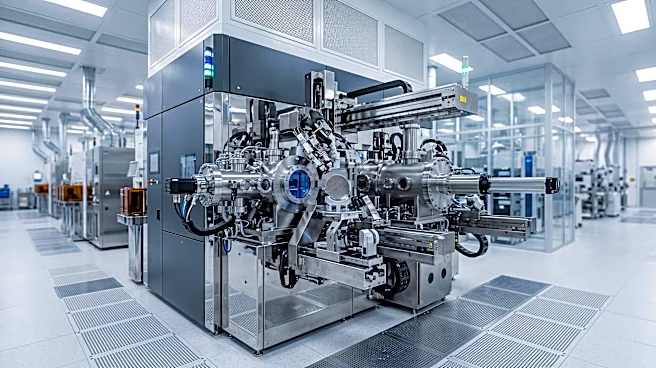
Doug Bettinger, Executive Vice President and Chief Financial Officer at Lam Research, anticipates a significant surge in wafer-fab equipment spending, projecting it to surpass $200 billion by 2027. This substantial increase is primarily attributed to the
escalating demand for artificial intelligence (AI) technologies, which is currently outpacing the semiconductor industry's capacity to supply. Bettinger's outlook suggests that the current infrastructure and production capabilities are insufficient to meet the rapid growth in AI-driven chip requirements. His comments also touched upon recent developments concerning Nvidia and their broader influence on overall business sentiment within the semiconductor sector, indicating a close watch on key players and market dynamics.
Why It's Important?
This projection from Lam Research highlights a critical bottleneck and a massive investment opportunity within the semiconductor industry. The anticipated spending surge indicates that chip manufacturers will need to significantly expand their production capacities to keep pace with AI advancements. This is crucial for the U.S. economy, as a robust domestic semiconductor manufacturing base is vital for national security and technological leadership. Increased wafer-fab spending will drive innovation in equipment technology, create jobs, and stimulate growth in related industries. Companies involved in semiconductor manufacturing equipment, materials, and services stand to gain substantially. Conversely, if the industry fails to scale up quickly enough, it could lead to supply shortages, higher costs for AI hardware, and potentially slow down the broader adoption and development of AI technologies across various sectors.
What's Next?
In response to the projected demand, semiconductor manufacturers are expected to accelerate their investments in new wafer fabrication plants and equipment. This will likely involve significant capital expenditures from major chipmakers globally, including those with operations in the U.S. Equipment suppliers like Lam Research will see increased orders and will need to scale their own production and innovation to meet this demand. Governments, particularly in the U.S., may continue to offer incentives and support for domestic semiconductor manufacturing to ensure supply chain resilience and technological competitiveness. The industry will also focus on improving efficiency and developing advanced manufacturing processes to maximize output and reduce costs in the face of surging AI demand.
Beyond the Headlines
The projected surge in wafer-fab spending underscores a fundamental shift in the global technological landscape, where AI is becoming the primary driver of semiconductor demand. This goes beyond mere economic growth; it represents a strategic imperative for nations and corporations alike. The race to build out AI infrastructure has profound implications for geopolitical power dynamics, as control over advanced chip manufacturing translates into significant influence. Environmentally, the construction and operation of new fabs will require substantial resources and energy, raising questions about sustainability and the carbon footprint of the AI revolution. Socially, the increased automation and AI capabilities enabled by these chips could lead to significant changes in labor markets, necessitating new skills and educational pathways. This investment boom is not just about chips; it's about shaping the future of technology and society.