









What's Happening?
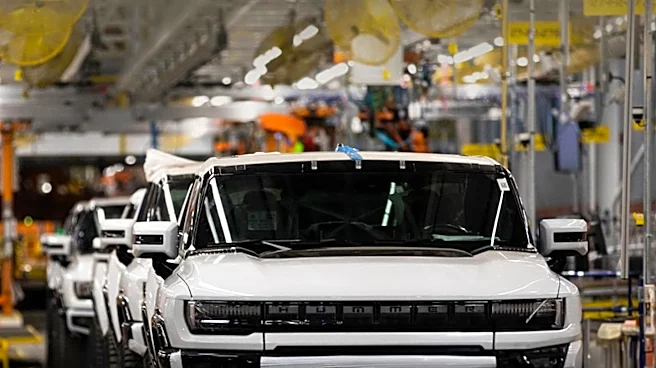
Canada's automotive industry is a significant contributor to North American car production, manufacturing over one million vehicles annually. The industry includes major players like Toyota, which operates large facilities in Ontario, producing models
such as the RAV4, Lexus NX, and RX. Honda also manufactures the Civic and CR-V in Canada, while General Motors produces the Chevy Silverado at its Oshawa plant. The intertwined nature of the U.S. and Canadian automotive sectors is highlighted by the flow of parts and assembly across the border, despite current trade tensions. This cross-border collaboration has historical roots, with Ford of Canada established before the Model T's introduction.
Why It's Important?
The Canadian automotive industry plays a crucial role in the North American market, supporting thousands of jobs and contributing to economic stability. The integration of U.S. and Canadian manufacturing processes ensures a steady supply chain, which is vital for both countries' economies. The production of popular models like the Toyota RAV4 and Chevy Silverado in Canada underscores the country's importance in meeting consumer demand in North America. Additionally, the industry's resilience amid trade tensions highlights its adaptability and significance in maintaining economic ties between the U.S. and Canada.
What's Next?
Future developments in the Canadian automotive industry may include increased production of electric vehicles, as global demand shifts towards more sustainable options. The ongoing collaboration between U.S. and Canadian manufacturers is likely to continue, with potential expansions in production capacity to meet evolving market needs. Stakeholders, including government bodies and industry leaders, may focus on strengthening trade agreements to ensure the continued flow of automotive goods across the border, fostering economic growth and stability in both countries.