






What's Happening?
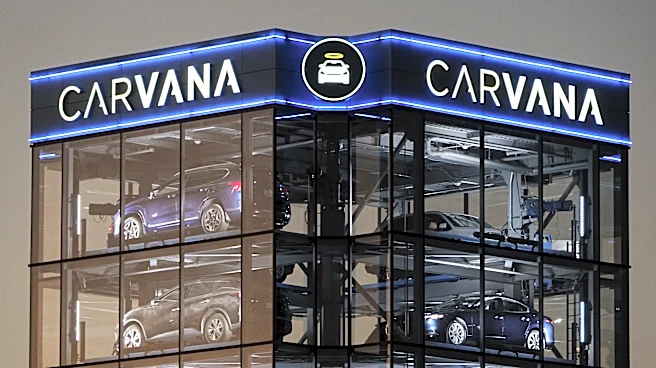
Carvana, an online used car retailer, has expanded its same-day vehicle delivery service to include southern Maine, New Hampshire, and Rhode Island. This expansion integrates these New England markets into Carvana's existing e-commerce and logistics network.
The company's management views this move as part of a broader strategy to offer end-to-end digital car buying and selling across more regions. Carvana's business model relies on a proprietary logistics network that handles vehicle inspection, reconditioning, and delivery. By extending its first-party logistics grid into these areas, Carvana aims to concentrate more volume through its existing inspection and reconditioning centers, potentially improving operational efficiency. This initiative aligns with the company's goal of enhancing regional inventory and accelerating delivery times, which are considered key drivers for marketing efficiency and unit economics.
Why It's Important?
This expansion is significant for Carvana as it aims to solidify its market position in the competitive used car retail sector. By broadening its same-day delivery footprint, Carvana can potentially attract more customers in the newly covered New England markets, increasing its sales volume and market share. The move is also crucial for the company's operational strategy, as wider coverage allows for better utilization of its existing inspection and reconditioning infrastructure, which analysts view as vital for throughput and margins. For investors, this expansion could signal Carvana's commitment to growth and operational optimization. The success of this rollout will depend on whether these new markets quickly adopt same-day orders without negatively impacting gross profit per vehicle, which would validate the expansion's effectiveness and contribute to the company's financial performance.
What's Next?
The immediate next steps for Carvana will involve monitoring the performance of its new same-day delivery markets in southern Maine, New Hampshire, and Rhode Island. The company will likely assess key metrics such as inventory depth, delivery times, and retail unit volumes in cities like Portland, Manchester, and Providence over the coming quarters. If these markets demonstrate rapid adoption of same-day orders and maintain healthy gross profit per vehicle, it will indicate a successful expansion. Conversely, any operational challenges or negative impacts on profitability could prompt Carvana to adjust its strategy or resource allocation in these regions. The company's ability to execute this expansion efficiently will be closely watched by analysts and investors, as it could influence future growth initiatives and overall market valuation.
Beyond the Headlines
Beyond the immediate operational and financial implications, Carvana's continued expansion of its digital car-buying model highlights a broader shift in consumer behavior and retail trends. The increasing demand for convenience and speed in e-commerce, even for high-value purchases like cars, underscores the importance of robust logistics and integrated digital platforms. This trend could further disrupt traditional automotive dealerships, pushing them to enhance their own online offerings and delivery capabilities to remain competitive. Furthermore, Carvana's reliance on its ADESA-linked inspection and reconditioning buildout emphasizes the critical role of efficient supply chain management in the digital retail landscape. The success of such models could also influence investment in automation and distribution technologies across various retail sectors, as companies seek to optimize their end-to-end customer experience.