






What's Happening?
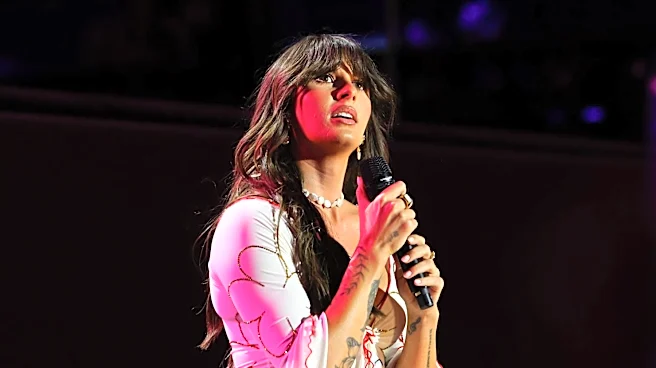
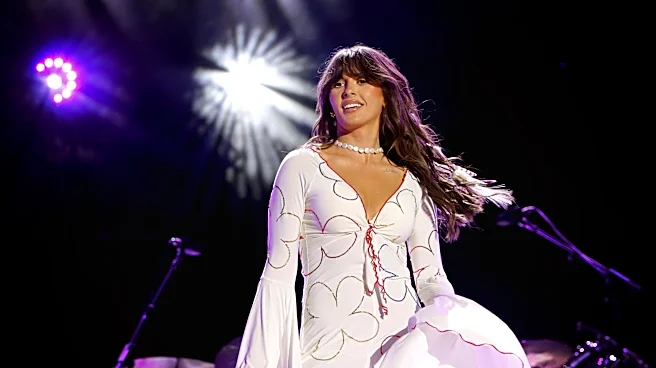
Country music artist Ella Langley's song 'i blame the bar' delves into the complex emotions of encountering an ex-partner and the temptation to revisit a past relationship, even when knowing it might lead to heartbreak. Featured on her album 'hungover,'
the track, co-written by Langley, Joybeth Taylor, Chris LaCorte, and Meg McRee, uses the bar setting as a metaphorical scapegoat for lingering feelings and potential missteps. The lyrics describe a narrator who, despite having moved past anger, finds herself drawn back into a familiar situation, attributing the blame to the environment and the influence of alcohol rather than personal responsibility. The song captures the relatable experience of questioning one's progress in moving on and the ease of finding external excuses for internal struggles. It highlights the internal conflict between knowing better and still being susceptible to old patterns when confronted with a past love.
Why It's Important?
Ella Langley's 'i blame the bar' resonates deeply within the country music genre and with a broad audience due to its authentic portrayal of post-breakup vulnerability and self-deception. The song's success underscores the enduring appeal of narratives that explore human relationships, emotional complexity, and the search for closure or understanding after a romantic split. For the music industry, it demonstrates the continued market for storytelling-driven country music that tackles relatable, everyday struggles. The song's lyrical depth, moving beyond simple blame to a more nuanced exploration of personal accountability, elevates it beyond a typical breakup anthem. It provides a voice to those who have experienced similar internal battles, fostering a sense of connection and shared experience among listeners. This emotional honesty contributes to Langley's growing profile as an artist capable of crafting hits that are both commercially successful and emotionally resonant, further solidifying her place in contemporary country music.
What's Next?
Following the success of 'i blame the bar' and other hits, Ella Langley is likely to continue her trajectory as a prominent figure in country music. Fans can anticipate more music that explores similar themes of relationships, personal growth, and the complexities of life, delivered with her signature blend of authenticity and relatable storytelling. Her continued success may lead to larger tours, more collaborations, and increased visibility in mainstream media. The song's popularity could also inspire other country artists to delve into more introspective and emotionally complex narratives, further enriching the genre. For Langley, maintaining this momentum will involve consistent songwriting, engaging performances, and a continued connection with her audience, who appreciate her honest approach to music. The track's impact may also be seen in its continued airplay and inclusion in playlists focused on breakup anthems or songs of self-reflection.
Beyond the Headlines
Beyond its immediate musical appeal, 'i blame the bar' taps into a universal psychological phenomenon: the human tendency to externalize blame for internal conflicts or undesirable outcomes. By personifying the bar and its elements (lime, salt, two-for-ones) as the culprits for a broken heart, the song subtly explores the coping mechanisms people employ to avoid confronting painful truths about themselves or their past relationships. This narrative device offers a safe space for listeners to acknowledge their own vulnerabilities without immediate self-condemnation. The song also reflects on the social dynamics of small towns, where past relationships and their aftermath are often public knowledge, adding another layer of pressure and complexity to moving on. Culturally, it reinforces the bar as a significant social setting in American life, a place where emotions are amplified, and boundaries can blur. The track's popularity suggests a collective recognition of these psychological and social nuances, making it more than just a song, but a commentary on human nature and the environments that shape our emotional responses.