



What's Happening?
Developers in Australia's Beetaloo Basin, Tamboran Resources and a subsidiary of Texas-based Formentera Partners, have initiated the first gas flow from the Shenandoah project to Darwin. This marks a significant step towards the commercialization of Australia's inaugural
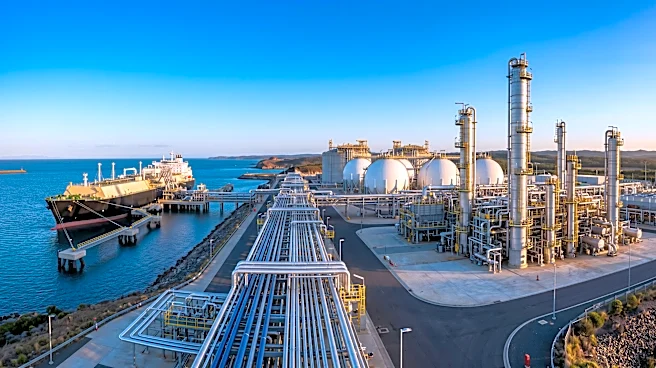
shale gas venture. The gas, transported over 600 km from Daly Waters, is initially expected to deliver a modest 40 terajoules (37-million cubic feet) per day. This early production will primarily fuel electricity for the grid and provide crucial data on gas well depletion rates. The information gathered will be instrumental in modeling a development plan that could potentially support increased liquefied natural gas (LNG) export capacity and power large data centers, drawing parallels with the U.S. shale industry. Northern Territory Chief Minister Lia Finocchiaro highlighted the project's importance for energy supply security and efficient grid operations.
Why It's Important?
The successful initiation of gas flow from the Beetaloo Basin holds significant implications for Australia's energy landscape and could influence global energy markets. For U.S. energy companies like Formentera Partners, this project represents an expansion of their expertise and investment in international shale gas development, potentially opening new avenues for collaboration and technology transfer. The project's success could bolster Australia's position as a major LNG exporter, impacting global supply dynamics and pricing. Furthermore, the aspiration to power data centers with this shale gas aligns with the growing global demand for energy-intensive digital infrastructure, potentially creating new markets for gas producers. However, the project faces hurdles, including the need for substantial pipeline infrastructure investment and compliance with Australia's evolving energy policies, which mandate renewable energy for data centers and local gas reservation for LNG projects. The involvement of Japanese giant Inpex, taking a position in Formentera's acreage, underscores the international interest and potential for large-scale development.
What's Next?
Tamboran CEO Todd Abbott indicated that the immediate focus is on consistently supplying gas to Darwin. Following this, the companies will address technical and regulatory challenges before pursuing further expansion. The project's long-term success hinges on attracting significant investment for pipeline infrastructure and navigating Australia's evolving energy policies. These policies include requirements for data centers to be primarily powered by renewable energy and for LNG projects to reserve 20% of their gas for the local market. The data collected from the initial gas flow will be crucial for developing a comprehensive development plan. The involvement of major international players like Inpex suggests potential for accelerated development, but the project will need to demonstrate its economic viability and environmental compliance to secure the necessary capital and regulatory approvals for wider commercialization.
Beyond the Headlines
The Beetaloo Basin project highlights the complex interplay between energy security, economic development, and environmental policy. While offering a new source of energy and potential economic benefits for Australia, it also raises questions about the long-term role of fossil fuels in a world transitioning to renewable energy. The project's success in powering data centers could set a precedent for how energy-intensive digital infrastructure is supported globally, potentially influencing investment decisions in both gas and renewable energy sectors. The policy requirement for local gas reservation for LNG projects reflects a growing trend among resource-rich nations to prioritize domestic needs, which could impact global energy trade dynamics. The project's development will be closely watched as a case study in balancing economic opportunity with environmental stewardship and evolving energy policies.