







What's Happening?
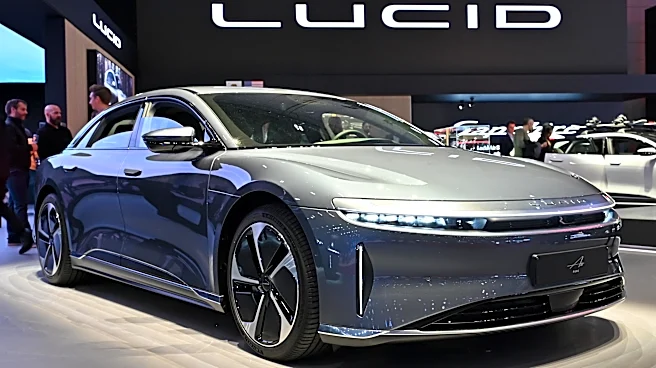
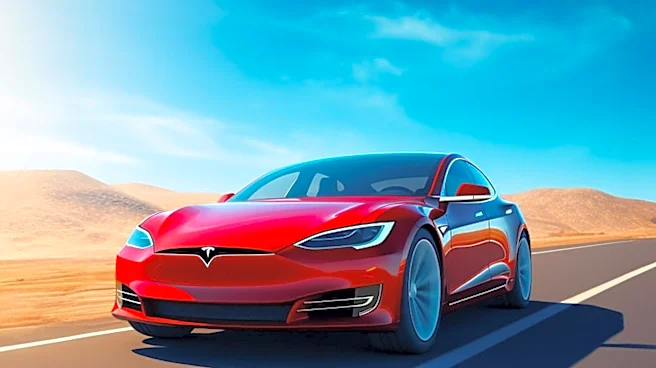
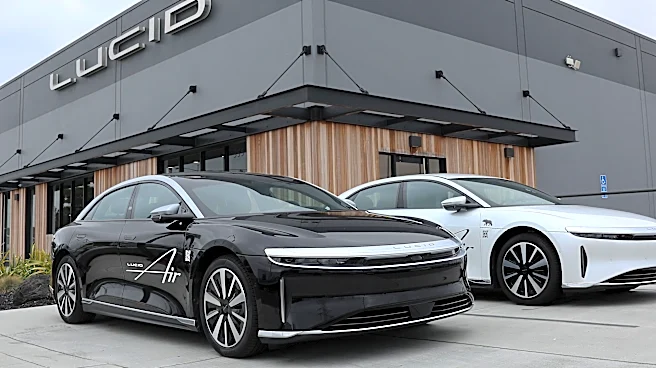
Citigroup has adjusted its investment portfolio in the third quarter, significantly increasing its stakes in several electric vehicle (EV) manufacturers, including Tesla, Lucid, and Rivian. According to a new filing, Citigroup raised its Tesla common-stock
holding by 10.1% to 8.69 million shares, valued at approximately $3.09 billion at quarter-end. The firm also more than doubled its Lucid stake by 106% to 4.25 million shares and increased its Rivian stake by 39.7% to 8.56 million shares. Conversely, Citigroup reduced its holdings in other automakers, including General Motors and Chinese EV manufacturers like XPeng and Li Auto. The bank's XPeng holding was cut by 82.6%, and Li Auto holdings were trimmed by 20.1%. Citigroup's overall reported holdings saw a slight increase to about $308.3 billion from $302.7 billion in the prior quarter. Retail sentiment on Stocktwits for Rivian is trending as 'extremely bullish,' while for Tesla, it is 'extremely bearish.'
Why It's Important?
Citigroup's strategic rebalancing of its automotive portfolio highlights a significant institutional investor's confidence in certain segments of the electric vehicle market, particularly in U.S.-based companies like Tesla, Lucid, and Rivian. This move could signal a belief in the long-term growth potential of these companies despite recent stock fluctuations. The reduction in stakes in General Motors and some Chinese EV makers suggests a more selective approach to the automotive sector, possibly due to differing growth outlooks or market conditions. For the U.S. EV industry, increased institutional investment can provide stability and potentially attract further capital, supporting innovation and production scaling. The contrasting retail sentiment for Rivian and Tesla also indicates divergent investor perceptions, which can influence market volatility and trading patterns for these stocks.
What's Next?
The shifts in Citigroup's investment strategy could influence other institutional investors and market analysts to re-evaluate their positions in the automotive sector. The increased capital flow into companies like Rivian and Lucid may support their ongoing efforts to scale production and expand their market presence. For Rivian, which is still in the process of scaling production and burning cash, such institutional backing is crucial for future capital raises at favorable terms. The performance of these stocks in the coming quarters will likely be closely watched, especially as the broader EV market continues to evolve with new models and increasing competition. Future earnings reports and production updates from these companies will be key indicators of whether Citigroup's investment strategy yields the anticipated returns.
Beyond the Headlines
Citigroup's investment decisions reflect broader trends in the global automotive industry, particularly the accelerating transition towards electric vehicles. The selective increase in stakes in U.S. EV companies and reduction in traditional automakers and some Chinese counterparts could indicate a strategic focus on specific technological advancements and market leadership. This trend also underscores the growing importance of environmental, social, and governance (ESG) factors in investment decisions, as EV companies are often viewed favorably in this regard. The divergence in retail sentiment between Rivian and Tesla, as observed on platforms like Stocktwits, highlights the complex and often emotional nature of retail investing, which can sometimes be at odds with institutional strategies. This dynamic interplay between institutional confidence and retail perception will continue to shape the market landscape for EV stocks.