





What's Happening?
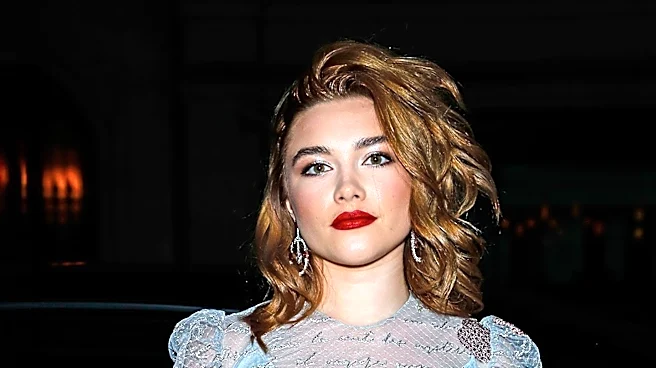
Actress Florence Pugh has publicly responded to widespread speculation regarding her physical appearance, specifically addressing claims that she has undergone plastic surgery or used GLP-1 medications like Ozempic. Pugh utilized an Instagram carousel
post to express her disturbance over the public scrutiny and the circulation of 'then-and-now' photos that suggest medical interventions. She clarified that any changes in her physique are a result of natural factors, including improved self-care, muscle building, and a changed relationship with alcohol. Pugh also highlighted her frustration with publications allegedly using manipulated images to imply she has had injectables. While asserting her right to push back against unsolicited commentary on her body, her statement included a line about being 'disturbed' for women who might think she is 'someone I'm not' due to such speculation, which has drawn some discussion.
Why It's Important?
This event is important as it highlights the intense public scrutiny celebrities face regarding their bodies and personal choices, particularly concerning cosmetic procedures and weight-loss medications. Pugh's statement contributes to the ongoing conversation about body image, authenticity, and the pressures placed on women in the public eye. Her decision to address the rumors directly underscores the impact of social media and tabloid culture on individual perceptions and mental well-being. The nuanced reaction to her statement—where some appreciate her transparency while others question the implication that having procedures is undesirable—reflects broader societal debates about body autonomy, self-acceptance, and the judgment associated with aesthetic enhancements. It also brings to light the ethical concerns surrounding the use of manipulated images in media.
What's Next?
In the immediate future, Pugh's statement is likely to continue to fuel discussions across social media platforms and entertainment news outlets regarding celebrity body image and the ethics of public commentary. Other public figures may be encouraged to share their own experiences or perspectives on similar issues, potentially leading to a broader dialogue about media responsibility and audience perception. The conversation may also shift towards the broader implications of GLP-1 medications and plastic surgery in society, moving beyond celebrity contexts to everyday individuals. Media organizations might face increased pressure to verify images and information before publication, especially concerning personal appearance, to avoid accusations of misrepresentation or defamation.
Beyond the Headlines
Beyond the immediate news cycle, Pugh's comments touch upon deeper societal issues related to beauty standards and the commodification of the female body. The public's intense focus on celebrity transformations, whether natural or medically assisted, reflects a cultural obsession with appearance and youth. This incident also raises questions about the responsibility of public figures when discussing sensitive topics like cosmetic procedures; while advocating for personal truth, there's a fine line between self-affirmation and inadvertently shaming others' choices. The ongoing debate about GLP-1 drugs, often framed as a 'quick fix,' intersects with broader discussions about health, wellness, and societal pressures to conform to certain body ideals, highlighting the complex interplay between personal health decisions and public perception.