





What's Happening?
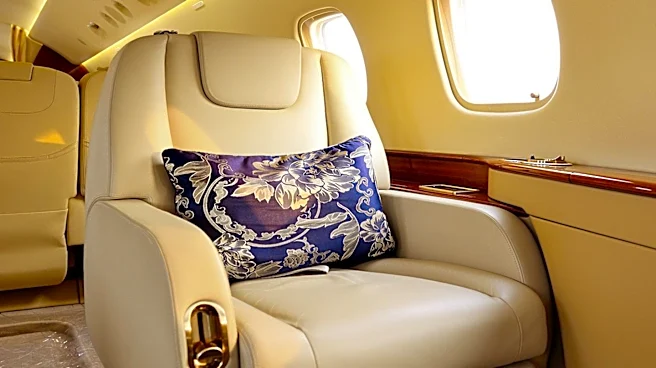
A recent 'Minute Review' video provided an overview of LATAM's 787-9 Business Class experience on a 12-hour, 25-minute flight from São Paulo (GRU) to Los Angeles (LAX). The review noted that despite an initial 'kerfuffle' involving a seat swap, the onboard
product was generally solid. Key positive aspects included the seat comfort, bedding, and service quality. However, the meal service was described as a disappointment, and the complete absence of Wi-Fi on such a long intercontinental flight was deemed inexcusable. The review is part of a new video series designed to offer digestible, high-level overviews of airline products.
Why It's Important?
This review of LATAM's 787-9 Business Class is significant for U.S. travelers, particularly those flying to and from South America. The mixed assessment highlights critical factors that influence passenger choice in long-haul international travel. While comfortable seating and good service are expected in Business Class, the lack of Wi-Fi on a flight exceeding 12 hours is a notable drawback in today's connected world. This deficiency could deter business travelers and others who rely on in-flight connectivity, potentially shifting their preference to airlines that offer robust Wi-Fi services. The disappointment with the meal service also points to an area where LATAM may need to improve to meet the expectations of premium passengers, impacting its competitiveness against other carriers on similar routes.
What's Next?
LATAM's continued operation of long-haul flights without Wi-Fi, as highlighted in this review, could lead to increased passenger dissatisfaction and potentially impact its market share, especially among U.S. travelers who increasingly expect connectivity. The airline may face pressure to invest in upgrading its fleet with in-flight internet capabilities to remain competitive on intercontinental routes. Furthermore, the feedback on meal service could prompt a review of its catering offerings in Business Class. Competitors on the São Paulo-Los Angeles route and similar long-haul flights may leverage these identified weaknesses in their marketing strategies, emphasizing their own superior connectivity and dining options.
Beyond the Headlines
The absence of Wi-Fi on a 12-hour intercontinental flight, as experienced on LATAM's 787-9 Business Class, underscores a growing disparity in passenger expectations versus airline offerings in the digital age. While some travelers might appreciate the forced disconnection, the majority, especially business travelers, view in-flight internet as a necessity rather than a luxury. This situation highlights the significant investment and logistical challenges airlines face in retrofitting older aircraft or ensuring consistent connectivity across their fleet. It also touches upon the broader ethical consideration of whether airlines have a responsibility to provide basic connectivity, given the increasing reliance on digital communication for work and personal life, even while traveling. The review implicitly raises questions about the long-term viability of premium products that do not meet evolving technological standards.