




What's Happening?
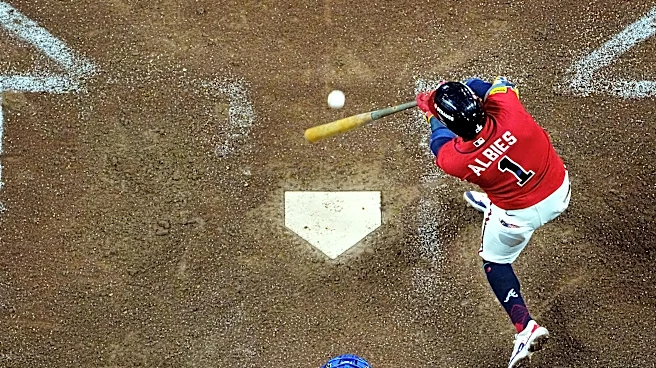
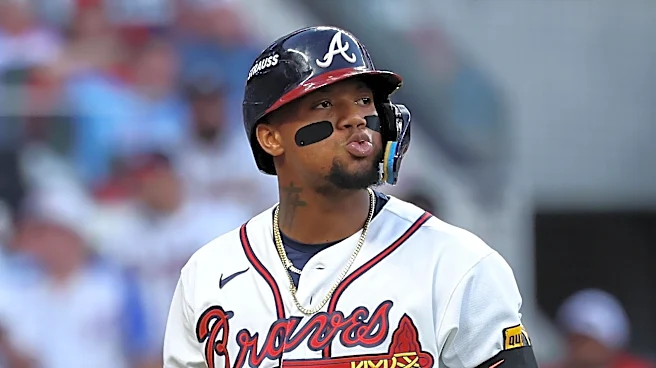
The Atlanta Braves' strategy of signing young players to long-term deals early in their careers is influencing the New York Mets' approach to their own emerging stars. The Braves notably signed Ronald Acuña Jr. to an eight-year, $100 million deal after
just one season and Ozzie Albies to a seven-year, $35 million extension. While Acuña Jr.'s deal proved beneficial for the Braves, Albies' performance has been less consistent, highlighting the risks involved. The Mets are now considering a more cautious approach, opting to wait and assess the full potential and health of their young players like Carson Benge and Nolan McLean before committing to similar long-term contracts. This shift in strategy aims to avoid potential financial burdens if players do not meet expectations or suffer injuries, a lesson drawn from both the successes and challenges faced by their rival, the Braves.
Why It's Important?
This development is important for the business of Major League Baseball, particularly for large-market teams like the New York Mets. The Braves' pioneering approach to securing young talent early, often at what appears to be a below-market rate, has set a precedent. However, the mixed outcomes of these deals underscore the inherent risks in professional sports contracts. For the Mets, a more patient strategy could lead to more informed investment decisions, potentially saving them from costly mistakes if young players do not develop as anticipated or face health issues. Conversely, waiting too long could mean missing out on securing a star at a more favorable price if a player's value skyrockets. This dynamic impacts player salary negotiations, team payroll management, and ultimately, the competitive balance within the league, as teams weigh the trade-offs between security for the player and certainty for the team.
What's Next?
The New York Mets are expected to continue monitoring the performance and development of their young prospects, such as Carson Benge and Nolan McLean, over a full year before making any long-term contract offers. This patient approach will allow the team to gather more data on their potential, health, and consistency. The Braves, meanwhile, will face decisions on existing long-term contracts, such as the option for Ozzie Albies in 2027, which will further illustrate the long-term implications of their early deal strategy. Other MLB teams will likely observe these strategies closely, adapting their own approaches to player development and contract negotiations based on the outcomes seen in Atlanta and New York. The ongoing evaluation of these early deals will continue to shape how teams manage their rosters and financial commitments in the competitive landscape of professional baseball.
Beyond the Headlines
The trend of signing young players to long-term deals early in their careers raises deeper questions about player agency and the financial structure of professional sports. While these deals offer financial security to young athletes, they also involve players potentially sacrificing significant future earnings if they outperform their initial contracts. For teams, it's a gamble on future performance and health, balancing the desire to lock in talent at a perceived discount against the risk of underperformance or injury. This dynamic can create ethical considerations regarding the fairness of such contracts, especially when players are very young and their long-term potential is still uncertain. It also highlights the evolving nature of player valuation and contract negotiation in MLB, where teams are constantly seeking innovative ways to gain a competitive edge while managing financial risk.