
What's Happening?
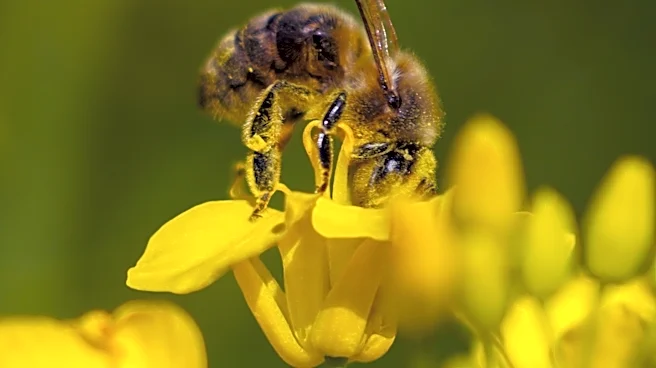
General Mills is supporting the establishment of native pollinator habitats on farms, as exemplified by a project at Frog Ranch in Washington's Yakima Valley. This initiative, in collaboration with the Xerces
Society, aims to improve crop health and reduce reliance on pesticides. Rafael Martinez, ranch manager at Frog Ranch, has observed that tomatoes, beans, and corn grown near these habitats are thriving without the usual pest infestations. The habitats not only attract pollinators but also predatory insects like lady beetles and lace wings, which naturally protect crops. This approach is part of Washington Fruit Growers' integrated pest management strategy, which seeks to decrease pesticide use and minimize pest damage. The program also addresses customer demand for certified proof of pollinator-friendly practices.
Why It's Important?
This initiative by General Mills and its partners highlights a growing trend in the agricultural sector towards sustainable farming practices. By investing in pollinator habitats, the company is addressing critical environmental concerns such as declining pollinator populations and the ecological impact of pesticide use. This shift can lead to healthier ecosystems, improved biodiversity, and potentially more resilient food systems. For consumers, it means access to produce grown with fewer chemicals, aligning with increasing demand for organic and sustainably sourced products. For farmers, it offers a natural and cost-effective method of pest control, potentially reducing input costs and improving crop yields. The success of such programs could set a precedent for other agricultural businesses, fostering a broader adoption of eco-friendly farming techniques across the U.S. agricultural landscape.
What's Next?
The success of projects like the one at Frog Ranch could lead to expanded implementation of pollinator habitats across more farms supported by General Mills and other food companies. Washington Fruit Growers plans to continue integrating these habitats into their operations, driven by both environmental benefits and customer demand for certified sustainable practices. The Xerces Society's Bee Better Certified program is likely to gain further traction as more growers seek to demonstrate their commitment to pollinator conservation. This could encourage other agricultural businesses to adopt similar science-based conservation practices, potentially influencing industry standards and consumer expectations for food production. Future developments may include increased research into the long-term ecological and economic benefits of such habitats, further solidifying their role in sustainable agriculture.
Beyond the Headlines
The initiative extends beyond immediate agricultural benefits, fostering a deeper connection between farmers and the environment. Ranch managers like Rafael Martinez and Rolando Martin have reported an unexpected sense of pride and a shift in their outlook on insects, viewing them not just as pests but as integral parts of a healthy ecosystem. This cultural shift within the farming community can lead to more holistic and environmentally conscious decision-making. Furthermore, the visible impact of these habitats on crop health and the environment provides a tangible example of how sustainable practices can be both effective and personally rewarding. This approach could inspire a broader re-evaluation of conventional farming methods, promoting a more harmonious relationship between agriculture and nature, and potentially influencing educational programs and policy discussions around ecological stewardship in the U.S.