






What's Happening?
A growing trend in home decor and sustainability sees individuals transforming old household items into new, functional, and stylish pieces. This practice, known as upcycling, involves repurposing items that would otherwise be discarded, such as old books,
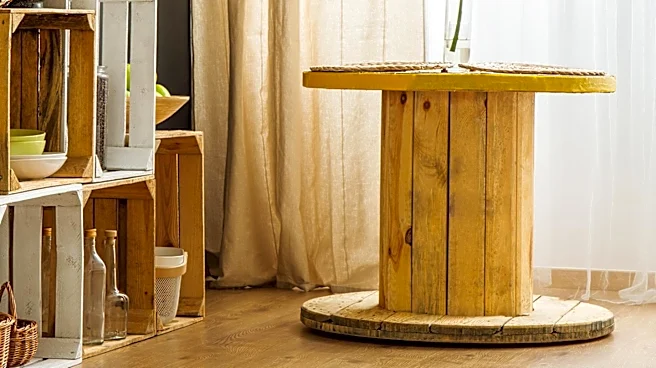
glass vases, tin cans, and even cardboard boxes. Experts highlight that upcycling is a significant way to reduce environmental impact, as any new production, even from sustainable brands, carries a negative environmental footprint. By giving existing items a second life, consumers can avoid contributing to manufacturing processes and waste generation. The movement is gaining traction as people seek creative ways to personalize their living spaces while adhering to budget constraints. Examples include turning old cabinets into botanical bookcases with peel-and-stick wallpaper, oyster shells into trinket dishes, and plain glass vases into nautical-themed decor using jute rope. This approach not only fosters creativity but also promotes a more mindful consumption habit.
Why It's Important?
The rise of upcycling holds significant importance for both environmental sustainability and personal finance in the U.S. From an environmental perspective, it directly addresses the issue of waste reduction by diverting materials from landfills, thereby lessening the demand for new raw materials and the energy required for manufacturing. This aligns with broader national goals for sustainability and circular economy principles. Economically, upcycling offers a practical solution for consumers looking to save money on home furnishings and decor, especially in times of economic uncertainty or rising costs. Instead of purchasing new, often expensive, items, individuals can create unique pieces at a fraction of the cost. This trend also fosters a sense of DIY culture and creativity, empowering individuals to customize their environments. For businesses, it signals a potential shift in consumer behavior towards more sustainable and cost-effective alternatives, which could influence product design and marketing strategies in the home goods sector.
What's Next?
The upcycling trend is expected to continue its growth trajectory, driven by increasing environmental awareness and economic pressures. We may see a further proliferation of online tutorials, workshops, and communities dedicated to sharing upcycling ideas and techniques, making it more accessible to a wider audience. Retailers might also begin to offer more tools, materials, and kits specifically designed for upcycling projects, catering to this growing market. Additionally, the concept could expand into more complex areas, such as upcycling larger furniture pieces or even architectural elements, as consumers become more adept and adventurous. This could also lead to an increased demand for second-hand goods and thrift store finds, as these locations serve as primary sources for upcycling materials. The movement may also influence policy discussions around waste management and sustainable consumption, potentially leading to initiatives that support and encourage repurposing and reuse at a broader scale.
Beyond the Headlines
Beyond its immediate benefits, the upcycling movement reflects a deeper cultural shift towards valuing resourcefulness and individuality over mass consumption. It challenges the traditional linear economy model of 'take, make, dispose' by promoting a more circular approach where items retain value and utility for longer. This shift has ethical implications, encouraging consumers to think critically about the lifecycle of products and their environmental footprint. Legally, increased upcycling could lead to discussions around product liability for repurposed items or intellectual property rights for unique upcycled designs. Culturally, it fosters a sense of pride in handmade items and unique decor, moving away from homogeneous, mass-produced aesthetics. This trend also highlights a growing desire for authenticity and personal expression in home environments, where each piece tells a story of transformation and creativity, rather than just being a purchased commodity. It signifies a broader societal move towards conscious living and sustainable practices.