




What's Happening?
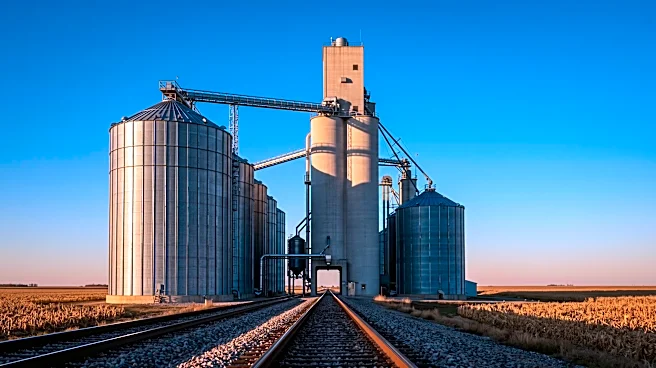
The ongoing trade tensions between the U.S. and China are significantly impacting agricultural markets, particularly corn imports. China is actively pursuing self-sufficiency in key agricultural products like corn, wheat, and soybeans, driven by both
domestic and international political reasons. This push for self-reliance is causing China to distance itself from the U.S.-dominated global market and establish its own trade rules. The ideological and political clashes between the two nations, largely shaped by economic needs, are leading to reduced investments in grain imports by U.S. farmers, which could decrease overall corn productivity and affect prices. While some predictions suggest U.S. farmers could lose billions in corn exports to China, other analyses indicate that increasing livestock demand in major corn importers might still drive demand for U.S. corn.
Why It's Important?
This shift in China's agricultural policy has profound implications for U.S. farmers and the global agricultural trade landscape. The reduction in Chinese demand for U.S. corn, coupled with China's efforts to diversify its import partners, directly threatens the profitability and stability of American agricultural exports. This situation highlights the vulnerability of U.S. industries to geopolitical tensions and trade disputes. The move by China to create its own trade rules and reduce reliance on the U.S. signifies a broader geopolitical strategy to assert its influence in global economic regulations. This could lead to a restructuring of global supply chains and trade alliances, impacting not only agricultural commodities but also other sectors reliant on U.S.-China trade relations.
What's Next?
U.S. farmers are likely to face continued short-term fluctuations in supply and demand for corn as China adjusts its import strategies and seeks new partners. The impact on corn prices remains ambiguous, but reduced investment in grain imports by U.S. farmers could lead to decreased output per land and overall corn productivity. The U.S. may need to explore alternative markets for its agricultural products, focusing on existing partners like Korea and Japan to increase demand for corn imports. China's continued pursuit of self-sufficiency and its efforts to establish new trade rules will likely intensify competition in global agricultural markets and could lead to further shifts in international trade dynamics.
Beyond the Headlines
The U.S.-China trade conflict extends beyond immediate economic impacts, touching upon deeper geopolitical and ideological clashes. China's drive for self-sufficiency can be viewed as a strategic move to reduce its vulnerability to external pressures and enhance its national food sovereignty. This approach challenges traditional economic theories of comparative advantage, as political and cultural factors increasingly influence trade decisions. The long-term implications could include a more fragmented global economy, with countries prioritizing national interests and self-reliance over free trade principles. This could lead to increased protectionism and a re-evaluation of global economic interdependence, potentially fostering new trade blocs and alliances that reshape the international order.