
What's Happening?
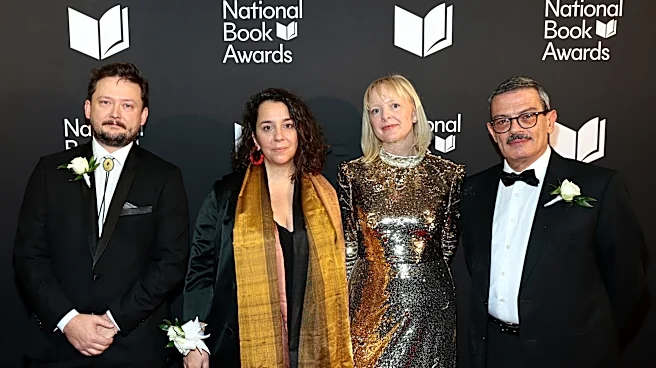
The 77th Annual National Book Awards were held at Cipriani Wall Street on November 18, celebrating human-authored literature and honoring several distinguished writers. The event, hosted by actor Kyle
MacLachlan and featuring musical guest Michelle Zauner, recognized Salman Rushdie with the 2026 Medal for Distinguished Contribution to American Letters and Perri Klass for Outstanding Service to the American Literary Community. Authors Guild CEO Mary Rasenberger attended, emphasizing the irreplaceable nature of human authorship and the imperative to protect writers from 'AI slop and the blatant theft of their work by AI behemoths.' Speakers throughout the evening also highlighted themes of free speech, book bans, and the resilience of writers. Notably, Nonfiction award winner Abdelrahman ElGendy was absent, having fled the United States in 2025 due to concerns over potential ICE arrest, with his visa denied upon his return.
Why It's Important?
This event underscores the growing tension between traditional human creativity and the rapid advancements in artificial intelligence, particularly concerning intellectual property rights and the future of authorship. The Authors Guild's strong stance against AI's impact on writers reflects a broader industry concern about the ethical implications of AI-generated content and the potential for widespread copyright infringement. The emphasis on free speech and book bans also highlights ongoing challenges to literary freedom and diversity in the U.S., with the absence of Abdelrahman ElGendy serving as a poignant reminder of the personal and political pressures faced by some authors. The awards not only celebrate literary excellence but also serve as a platform for advocating for the rights and protection of writers in an evolving technological and political landscape.
What's Next?
The Authors Guild and other literary organizations are expected to continue their advocacy efforts to protect human authors from the perceived threats of AI, likely pushing for stronger legal frameworks and ethical guidelines regarding AI's use of copyrighted material. The ongoing discussions around free speech and book bans suggest continued activism and potential legal challenges in various states to safeguard access to diverse literature. The literary community will likely maintain its focus on celebrating and promoting human-authored works, while also addressing the practical and ethical challenges posed by new technologies and political climates. The situation with Abdelrahman ElGendy may also draw further attention to immigration policies and their impact on international artists and intellectual exchange.
Beyond the Headlines
The National Book Awards, beyond their celebratory function, serve as a critical barometer for the state of literature and intellectual freedom in the U.S. The explicit concerns raised about AI's impact on authorship point to a fundamental shift in how creativity is valued and protected in the digital age. This debate extends beyond mere copyright to questions of artistic integrity, the economic viability of writing as a profession, and the very definition of 'author.' The recurring theme of book bans and the specific case of ElGendy also reveal deeper societal anxieties about censorship, cultural diversity, and the freedom of expression, suggesting that the literary world is increasingly on the front lines of broader cultural and political battles.