






What's Happening?
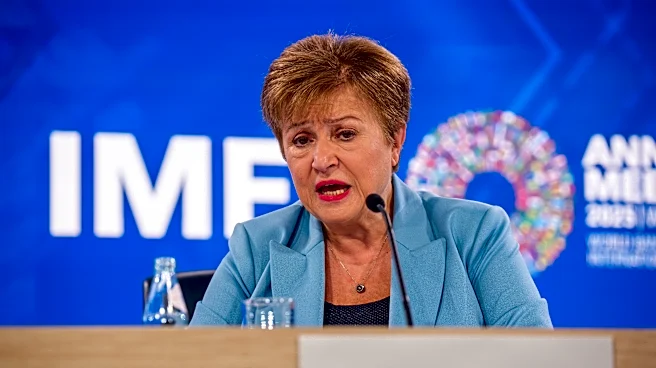
The International Monetary Fund (IMF) is anticipated to convene its Executive Board next month to consider the release of approximately $1.2 billion in program financing for Pakistan. This follows a staff-level agreement reached between the IMF and Pakistani
authorities on October 7, after discussions held from September 23 to October 7. The funding includes $1 billion through the Extended Fund Facility (EFF) and $210 million under the Resilience and Sustainability Facility (RSF), which would bring the combined disbursements under these two programs to roughly $5.7 billion. The IMF has indicated that Pakistan's implementation of reforms is broadly on track, projecting a fiscal year 2026 growth of 3.6% and reserves of around $21.5 billion by September-end, with a broadly balanced current account. However, geopolitical, energy-price, and global-financial risks were also flagged.
Why It's Important?
The potential release of $1.2 billion from the IMF is crucial for Pakistan's economic stability, providing much-needed foreign exchange and bolstering investor confidence. The IMF's assessment of Pakistan's economic performance, including projected growth and reserve levels, offers a positive outlook, but the identified risks highlight the fragility of the global economic environment. This funding is essential for Pakistan to manage its external debt obligations and support its ongoing economic reforms. The continued engagement with the IMF signals international support for Pakistan's efforts to achieve macroeconomic stability, which is vital for attracting further investment and ensuring sustainable growth. The outcome of this board meeting will be closely watched by financial markets and international creditors.
What's Next?
The IMF Executive Board meeting, expected next month, will be the critical next step for Pakistan to secure the $1.2 billion in funding. While a specific date has not been formally announced, the staff-level agreement suggests a positive outcome is likely, subject to the Board's approval. Pakistan will need to continue demonstrating its commitment to the agreed-upon economic and financial policies to ensure the timely disbursement of funds. The country will also need to remain vigilant against geopolitical, energy-price, and global-financial risks that could impact its economic trajectory. The successful release of these funds could pave the way for further international financial support and help Pakistan navigate its economic challenges.
Beyond the Headlines
The IMF's continued support for Pakistan, despite global economic uncertainties, underscores the institution's role in maintaining international financial stability. The emphasis on structural reforms and fiscal discipline as conditions for aid reflects a broader trend in international lending, where financial assistance is increasingly tied to governance and policy improvements. For Pakistan, this means not only addressing immediate financial needs but also implementing long-term reforms to build a more resilient economy. The geopolitical risks flagged by the IMF highlight the interconnectedness of global events and their potential impact on national economies, emphasizing the need for robust risk management strategies and diversified economic partnerships.