




What's Happening?
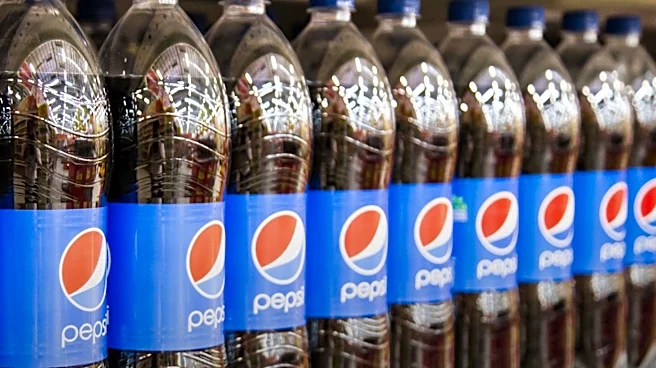
Robert Pohlad, a director at PepsiCo and co-owner of the Minnesota Twins, has made a significant investment of $23.7 million in PepsiCo stock. This move comes as market strategists, such as Jim Paulsen, suggest a potential shift away from AI-driven stocks
towards 'old era' companies. Paulsen's S&P 500 Old Era Stock Price Index has seen a 4.2% rise, contrasting with a 27% decline in the Bank of America AI Beneficiaries Index over the past month. Pohlad's purchase is seen as a vote of confidence in PepsiCo's ongoing 'mini-turnaround' efforts, particularly its international growth and domestic renovation strategies. PepsiCo's third-quarter sales showed a 5.6% overall growth, with organic growth at 3.1%, driven largely by an 8% increase in international sales, while North American beverage and food sales remained relatively flat. The company is focusing on making products more affordable, innovating with healthier ingredients in snacks, and expanding non-sparkling beverage categories through in-house brands and licensing.
Why It's Important?
This substantial investment by a well-informed insider like Robert Pohlad signals potential confidence in PepsiCo's future performance and could influence investor sentiment towards established, defensive stocks. In a market potentially re-evaluating the dominance of AI stocks, a shift towards 'old era' companies like PepsiCo could represent a broader economic trend. PepsiCo's strategic adjustments, including product affordability and health-conscious innovations, are crucial for maintaining market share in North America, where growth has slowed due to factors like the GLP-1 effect and rising consumer costs. The company's strong global presence and market leadership in savory snacks and beverages provide a defensive moat, making it an attractive option for investors seeking stability amidst potential tech sector volatility. This could lead to a re-evaluation of valuations for consumer staple companies, potentially benefiting those with strong brands and distribution networks.
What's Next?
PepsiCo is expected to continue its focus on international expansion and domestic market revitalization. The company's management guides for further improvement in sales volumes, although acknowledging that a full turnaround will take time. Investors will be closely watching for the results of PepsiCo's strategies to boost North American sales, particularly its efforts in product innovation and digital marketing. The broader market will also be observing whether the predicted shift from AI stocks to 'old era' stocks gains further momentum, potentially leading to increased investment in companies with strong fundamentals and defensive characteristics like PepsiCo. Future earnings reports will provide critical insights into the effectiveness of PepsiCo's current initiatives and whether Pohlad's significant investment will yield the anticipated returns.
Beyond the Headlines
Robert Pohlad's investment highlights a potential strategic pivot for investors looking beyond the high-growth, high-volatility tech sector. It underscores the enduring value of established brands and robust distribution networks in consumer staples, even in an era dominated by technological advancements. The 'old era' versus 'new era' stock debate also touches upon fundamental economic shifts, questioning whether recent tech-driven market gains are sustainable or if a return to more traditional valuation metrics is imminent. This could signify a broader re-assessment of risk and reward in investment portfolios, favoring companies with proven profitability and resilience over speculative growth. The move also reflects the ongoing challenge for large consumer goods companies to adapt to evolving consumer preferences, such as increased health consciousness, while maintaining profitability and market dominance.