







What's Happening?
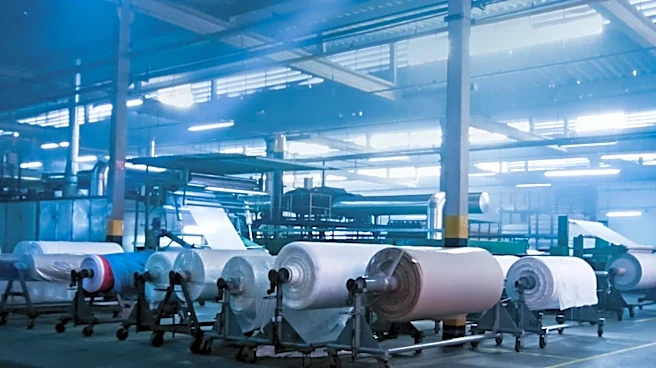
SOSV HAX portfolio company unspun is collaborating with Arvind Limited, a major Indian textile and apparel conglomerate, to test 3D weaving technology for on-demand manufacturing. unspun has adapted circular weaving looms, typically used for tubular tarps
and bags, to produce variable-diameter trousers in a single piece, eliminating the need for cutting, sewing, and side seams. This innovative OneWeave machine aims to create zero-waste trousers on demand with minimal manual labor and significantly reduced lead times, from months to days. Arvind Limited is installing the first two commercial OneWeave machines at its facility in Ahmedabad, with initial orders expected in early 2027. unspun currently operates seven such machines at its own facility in Emeryville, CA, serving customers like REI, Walmart, and Gap.
Why It's Important?
This collaboration is significant for the U.S. fashion industry as it addresses critical issues of waste and carbon emissions in apparel manufacturing. Traditional weaving processes are often resource-intensive and generate substantial fabric waste. unspun's 3D weaving technology offers a potential solution by enabling zero-waste production and reducing the carbon footprint associated with garment manufacturing. For U.S. retailers and brands like REI, Walmart, and Gap, adopting this technology could lead to more sustainable supply chains, faster inventory turnover due to on-demand production, and reduced costs associated with waste and labor. This innovation could also enhance supply chain resilience by allowing for more localized and agile manufacturing, lessening reliance on distant production facilities and mitigating risks associated with global disruptions.
What's Next?
The deployment of unspun's OneWeave machines at Arvind's facility marks a crucial step towards scaling this 3D weaving technology. If successful, this partnership could pave the way for broader adoption of on-demand, zero-waste manufacturing processes across the global fashion industry, including in the U.S. We can expect to see more brands exploring similar technologies to meet growing consumer demand for sustainable products and faster delivery times. Further advancements in 3D weaving could lead to the production of a wider range of garments beyond trousers, potentially revolutionizing how apparel is designed, manufactured, and consumed. The success of this pilot will likely influence investment in similar deep tech solutions aimed at transforming traditional manufacturing paradigms.
Beyond the Headlines
The development of 3D weaving technology by unspun represents a fundamental shift in manufacturing paradigms, moving away from mass production towards highly customized, on-demand creation. This could have profound implications for the entire fashion ecosystem, challenging established business models and supply chain structures. Beyond environmental benefits, this technology could democratize fashion production, allowing smaller brands or even individual designers to create custom garments efficiently. It also raises questions about the future of garment worker roles, potentially shifting labor from traditional sewing to machine operation and maintenance. The long-term impact could be a more localized, responsive, and sustainable fashion industry, fundamentally altering consumer expectations regarding product availability, customization, and environmental responsibility.