




What's Happening?
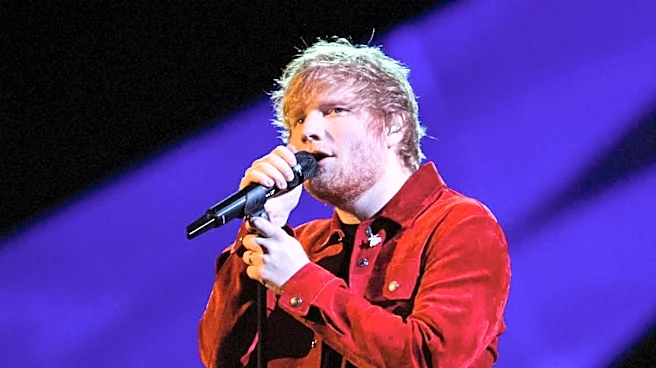
Singer Pink has addressed criticism following her comments regarding Macklemore's anti-Israel performance during his opening act for Ed Sheeran at MetLife Stadium. Macklemore used his stage time on September 4 and 5 to perform his song 'Hind's Hall,'
call for 'Free Palestine,' and accuse Israel of genocide, accompanied by a slideshow of war footage from Gaza. Pink initially reposted a video from StopAntisemitism criticizing Macklemore and calling for his removal from Sheeran's tour, which led to backlash from fans who perceived her as pro-Israel. In response, Pink issued a statement on Instagram clarifying her stance. She stated, 'I was born a Jew. I didn’t pick it, and I’ve never hidden it.' She reiterated her belief that Hamas is a terrorist organization, Palestinians deserve a future that honors their humanity, and protecting innocent life is paramount. Pink also expressed her fear and concern as a Jewish mother regarding Macklemore's performance and comments, particularly his past actions, such as wearing a 'random costume' that many Jews found offensive, and his recent assertion that his message 'wasn’t about them' to Jewish attendees.
Why It's Important?
This incident highlights the increasing tension and polarization surrounding the Israeli-Palestinian conflict within the entertainment industry and public discourse in the U.S. Pink's response underscores the complexities artists face when addressing sensitive geopolitical issues, particularly when their personal identities intersect with their public statements. The backlash she received, and her subsequent clarification, illustrate the pressure on public figures to align with specific viewpoints, often leading to misinterpretations and accusations. The event also brings to light the ongoing debate about the appropriateness of political activism during entertainment events and the potential impact on diverse audiences. For Jewish communities, Pink's statement resonates as a call for understanding and recognition of their fears amidst rising antisemitism, while for pro-Palestinian advocates, Macklemore's performance is seen as a necessary use of his platform to raise awareness. The situation reflects a broader societal struggle to navigate freedom of expression, artistic responsibility, and the impact of political messaging in public spaces.
What's Next?
Macklemore has publicly defended his remarks, stating that he chose to tour with Ed Sheeran specifically to use the large platform to advocate for 'Free Palestine,' asserting that 'Wanting all humans to be treated equal should never be controversial.' The Israeli-American Council has launched a petition calling for Macklemore's removal from the remaining eight U.S. stadium shows where he is scheduled to open for Sheeran through early November. This petition could intensify pressure on Ed Sheeran and his tour organizers to address the controversy, potentially leading to decisions about Macklemore's continued participation. The incident may also prompt other artists and event organizers to re-evaluate their policies regarding political statements during performances, especially given the potential for audience division and public relations challenges. Further public statements from Macklemore, Pink, or Ed Sheeran's team could emerge as the tour progresses and the petition gains traction, continuing the public debate on artistic freedom versus audience sensitivity.
Beyond the Headlines
The controversy extends beyond the immediate concert incident, touching upon deeper issues of identity, representation, and the weaponization of political narratives in cultural spaces. Pink's emphasis on her Jewish identity and her experience of being told what she believes without being asked speaks to a broader phenomenon where individuals are often stereotyped or assigned political stances based on their background. Macklemore's use of his platform, while intended to advocate for a cause, has inadvertently highlighted the challenges of delivering such messages without alienating or causing distress to segments of the audience, particularly those with direct personal connections to the conflict. This event also reflects a growing trend where entertainment venues become arenas for political expression, blurring the lines between art and activism. The differing reactions underscore a societal divide in how empathy and justice are perceived and prioritized, revealing the profound impact of global conflicts on local communities and individual experiences within the U.S.