


What's Happening?
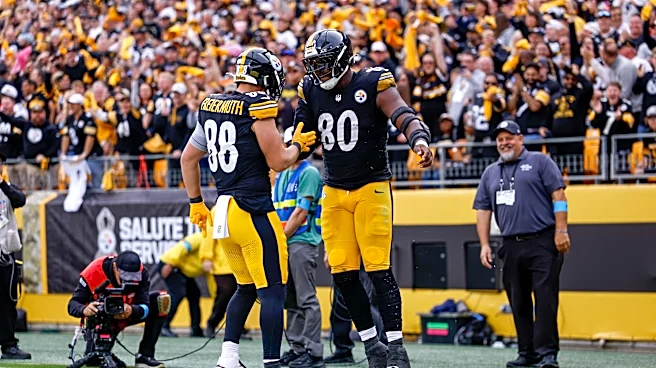
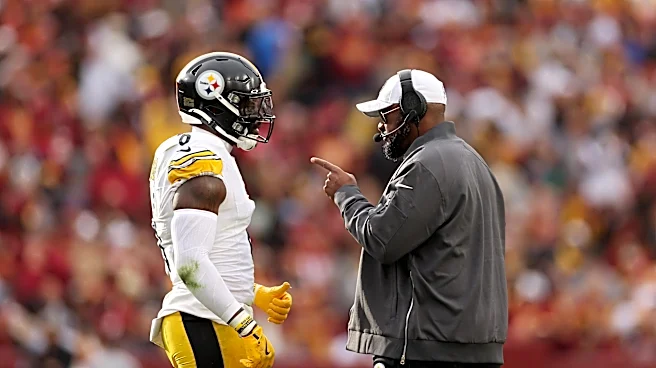
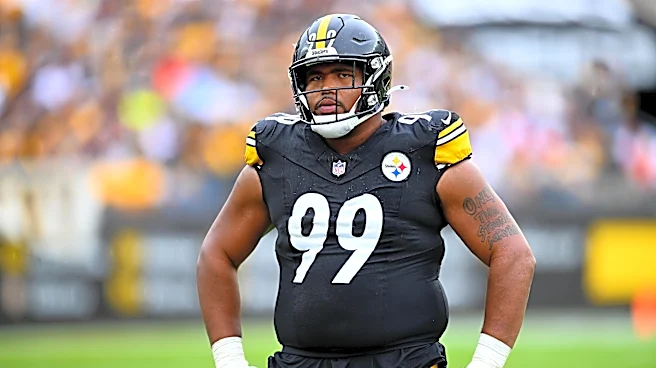
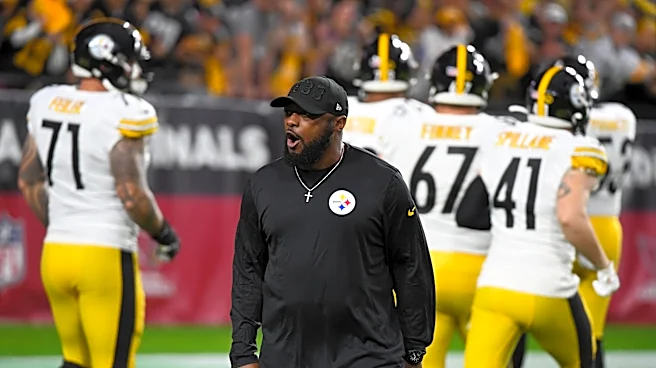
Former Pittsburgh Steelers head coach Mike Tomlin, who stepped down in January, is reportedly still actively engaging with his former players, specifically defensive linemen Cameron Heyward and T.J. Watt. According to Heyward on his 'Not Just Football'
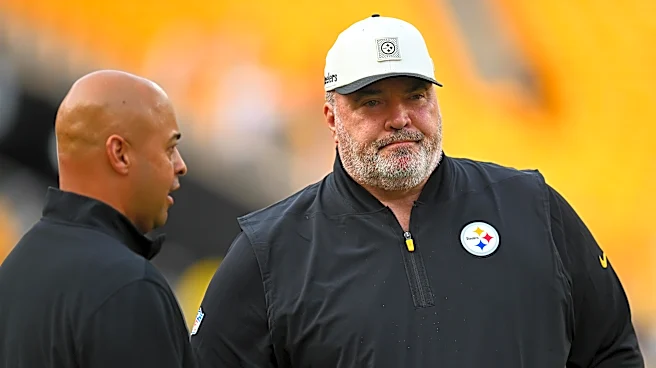
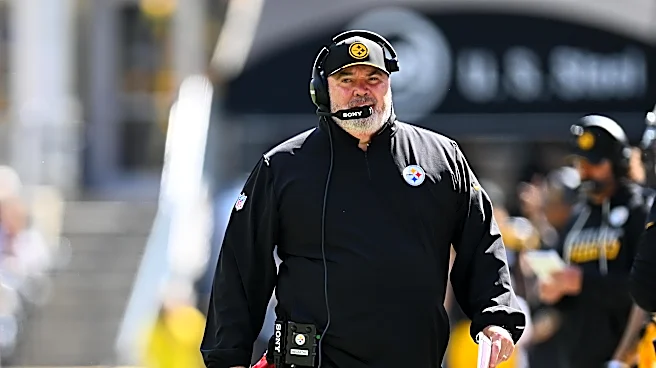
podcast, Tomlin has been texting him and Watt throughout the 2026 NFL season, offering insights on opposing defensive linemen and providing encouragement. This communication highlights Tomlin's continued impact on the team, even as they navigate the season under new head coach Mike McCarthy, who has led the Steelers to a 6-2 record and first place in the AFC North. Tomlin's involvement extends to post-game messages, such as a text after their Week 8 victory over the Cleveland Browns, demonstrating his enduring connection and competitive spirit regarding the team's rivals.
Why It's Important?
This ongoing interaction between Mike Tomlin and his former players underscores the significant personal relationships he cultivated during his tenure as head coach. It illustrates how a coach's influence can extend beyond their official role, impacting player performance and team morale from a distance. For the Steelers, having a respected figure like Tomlin still offering guidance, even informally, could provide an additional layer of support and motivation for key defensive players. This situation also highlights the unique bond that can form between coaches and athletes in professional sports, where mentorship and personal connection can transcend organizational changes. It suggests that Tomlin's 'players coach' reputation was well-earned and continues to resonate with those he led, potentially contributing to the team's current success.
Beyond the Headlines
The continued engagement of Mike Tomlin with his former players, particularly through a group chat, offers a glimpse into the evolving dynamics of professional sports relationships in the digital age. It raises questions about the boundaries of former coaching relationships and the informal networks that can persist within a highly competitive environment. While seemingly benign, such interactions could be seen as a unique form of continued mentorship, or, from another perspective, as an unusual level of involvement for a former coach. This scenario also speaks to the deep personal investment many coaches have in their players' careers, extending beyond the confines of their employment. It suggests that the impact of a coach is not solely defined by their presence on the sidelines but can endure through personal connections and modern communication channels.