



What's Happening?
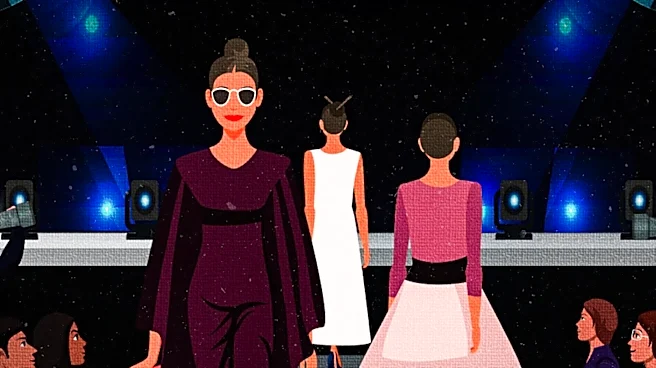
The fashion industry is undergoing a significant shift towards body positivity and the representation of diverse body types. This movement challenges traditional beauty standards that have historically prioritized slimness. Brands are increasingly showcasing
models of various sizes and creating marketing materials that empower individuals to embrace their unique physical attributes. This change is driven by evolving societal norms that advocate for inclusivity and acceptance of all body types. The 'California curve model' is a pivotal concept in this transformation, emphasizing body diversity and encouraging brands to adopt inclusive practices in their campaigns and product offerings. This includes casting a wider range of models and designing clothing with more forgiving and flattering fits for diverse body shapes.
Why It's Important?
This shift is important because it reflects a growing demand from consumers for authenticity and inclusivity in fashion. Shoppers are more likely to support brands that align with their values regarding body positivity, leading to increased sales and stronger brand loyalty for companies that embrace diversity. The movement also has a positive impact on models' self-esteem, encouraging them to embrace their natural bodies and fostering a supportive community. By challenging the 'thin-is-in' stereotype, the industry is moving towards a more realistic and empowering representation of individuals, which can have broader societal benefits by promoting self-acceptance and reducing negative body image issues. The emphasis on adaptable and comfortable clothing also caters to a wider range of body types, making fashion more accessible.
What's Next?
The fashion industry is expected to continue its evolution towards greater inclusivity. This will likely involve further expansion of size ranges, with more brands offering clothing that caters to a broader spectrum of body types. The influence of technology, such as virtual and augmented reality, will play a role in creating immersive shopping experiences and personalized styling services based on individual preferences and body types. Independent designers and smaller brands, who often lead the way in custom fitting and inclusive sizing, will continue to push the boundaries of what is considered 'standard.' There will also be an ongoing focus on ethical production and sustainable practices, ensuring that inclusivity extends beyond body representation to encompass fair labor and environmental responsibility.
Beyond the Headlines
Beyond the visible changes in marketing and product lines, this movement touches upon deeper ethical and cultural dimensions. It questions the long-standing power dynamics within the fashion industry, where certain body types and aesthetics have been historically privileged. The push for body positivity encourages a re-evaluation of what constitutes 'beauty' and 'fashionable,' moving towards a more fluid and individualistic understanding. It also highlights the role of social media in amplifying diverse voices and challenging traditional gatekeepers of fashion. The conversation extends to the psychological impact of fashion, emphasizing how clothing can influence self-perception and emotional well-being. Ultimately, this shift represents a broader societal trend towards greater acceptance and celebration of individual differences, with fashion serving as a powerful medium for this cultural transformation.