






What's Happening?
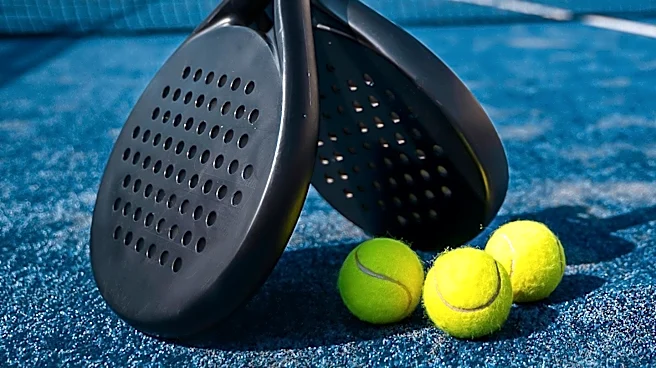
A systematic review published in Frontiers in Psychology indicates that padel and pickleball offer distinct psychological benefits. The review, led by Lena Lauxtermann at the University of Vienna, found that pickleball participation is associated with
greater happiness, life satisfaction, and social integration, as well as lower depression, particularly among older adults and female players. Padel, on the other hand, was more frequently studied in competitive contexts, with research focusing on performance-related emotions such as self-confidence, anxiety, and mental fatigue among athletes. The study, which analyzed 14 studies involving 1,403 participants from the United States, Spain, and Finland, aimed to explore the mental health and well-being aspects of these rapidly growing racket sports, an area less studied compared to their physical benefits. The authors noted that while both sports are social and accessible, their different playing styles and typical participant demographics contribute to varied psychological outcomes.
Why It's Important?
This research is important because it sheds light on the mental health benefits of physical activity, particularly through accessible and social sports like padel and pickleball. In a society where many individuals do not meet recommended activity levels, understanding the psychological incentives for participation can help promote healthier lifestyles. The findings suggest that pickleball, with its focus on recreational play and social interaction, can be a valuable tool for enhancing well-being and combating loneliness, especially among older populations. Conversely, padel's competitive nature offers insights into how sports can influence performance-related psychological states such as confidence and anxiety. This differentiation can inform public health initiatives and recreational program development, allowing for tailored recommendations that align with individuals' mental health goals and preferences, thereby potentially increasing engagement in physical activity across various demographics.
What's Next?
The authors of the review emphasize that stronger research is needed to definitively determine whether playing these sports directly causes improvements in mental health. Future studies should move beyond observational designs to include randomized controlled trials to establish causality. Additionally, the review highlighted geographical limitations, with all included studies originating from only three countries, suggesting a need for more diverse international research. Padel research could benefit from including more recreational players, while pickleball research could expand its focus beyond older adults to provide a more comprehensive understanding of its effects across different age groups. Addressing these limitations will help to solidify the evidence base and provide clearer guidance for leveraging these sports for mental health promotion.
Beyond the Headlines
The distinct psychological profiles of padel and pickleball underscore a broader trend in sports science: the recognition that different forms of physical activity cater to varying psychological needs and preferences. This goes beyond the simple physical benefits of exercise, delving into the nuanced ways sports can impact emotional regulation, social connection, and cognitive function. The emphasis on social integration in pickleball, for instance, highlights the critical role of community and belonging in mental well-being, especially for demographics prone to social isolation. For padel, the focus on performance-related emotions speaks to the psychological demands and rewards of competitive environments. This differentiation could lead to more personalized approaches in sports psychology and public health, where individuals are matched with activities that best suit their mental health objectives, moving towards a more holistic understanding of health that integrates physical, social, and emotional dimensions.